Are water changes necessary in a reef tank? Yes - here is what they actually do
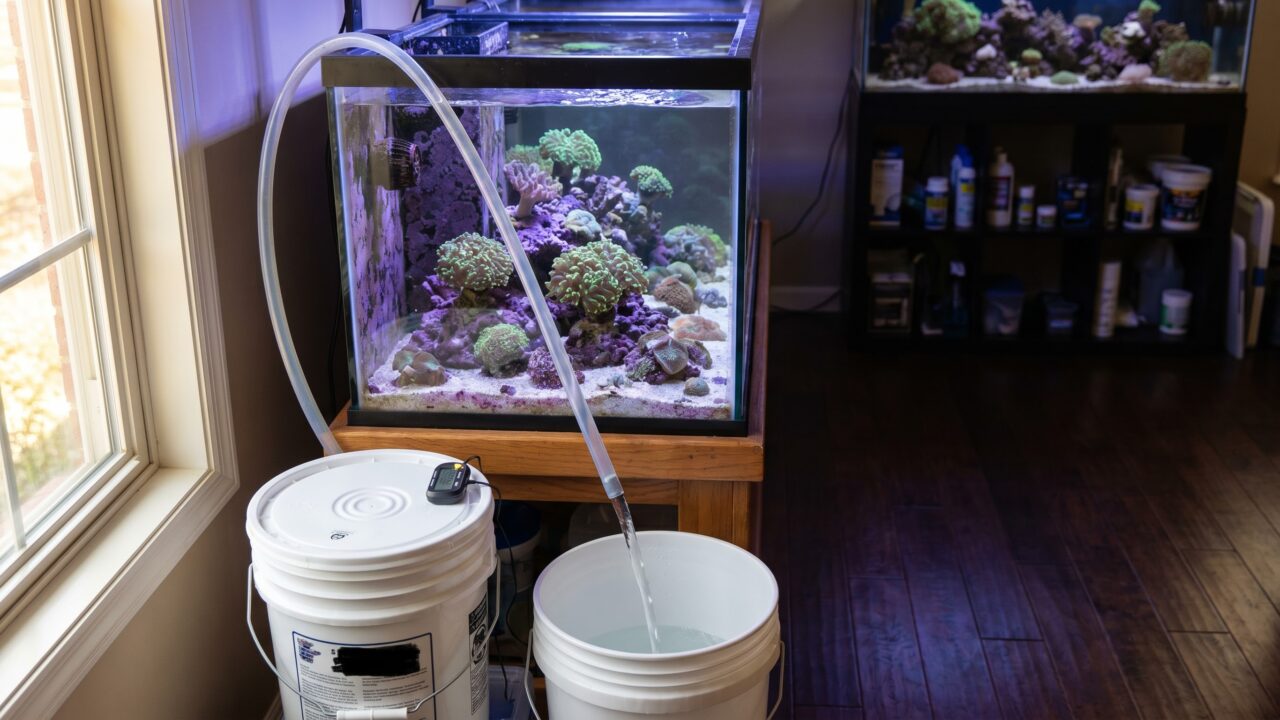
Yes, water changes are necessary in a reef tank - especially for beginners. A 10% change every week is the single most reliable tool you have for keeping water quality stable, and no dosing system fully replaces it at the entry level. That said, experienced keepers do run mature, thriving reefs without routine water changes. Understanding why water changes work is the key to knowing when you can confidently step away from them - and when skipping them will quietly wreck your tank.
What water changes actually do
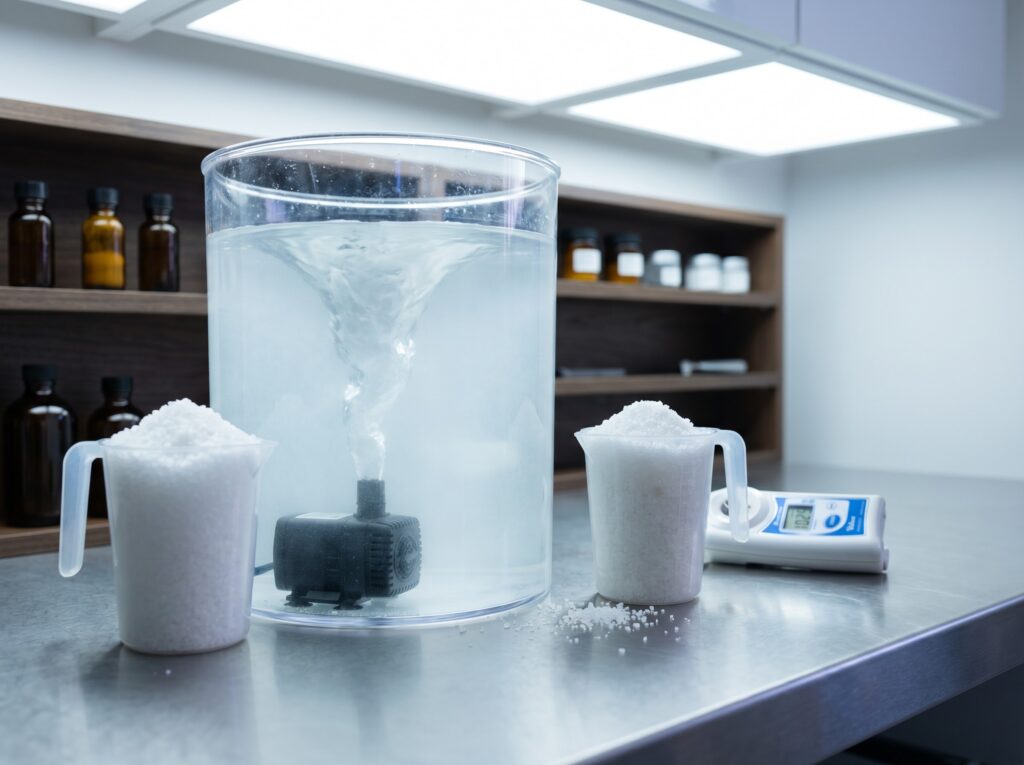
A water change does three distinct jobs at once. No single piece of equipment handles all three.
1. It exports nutrients you cannot easily filter out. Fish waste and uneaten food break down into nitrate and phosphate. Skimming, refugium macro-algae, and biopellets all chip away at nitrate and phosphate, but a water change physically removes a percentage of everything dissolved in the water column - including compounds that have no dedicated removal method. Seachem's water chemistry guidance puts it plainly: a water change "dilutes organic acids which lower the pH and replenishes essential minerals, buffers, and trace elements." No single reactor does all of that in one step.
2. It replenishes trace elements your corals consume. Natural seawater contains dozens of trace elements - Tropic Marin's reef salt research identifies at least 70 - among them iron, iodine, strontium, boron, bromine, and more. Corals, coralline algae, and invertebrates pull these elements from the water constantly. Red Sea's research team identifies 36 major, minor, and trace elements "regularly depleted from the aquarium water" with "an active role in coral growth and coloration." A quality salt mix - Tropic Marin, Red Sea Coral Pro, Seachem Reef Salt - contains these elements at natural concentrations. Every water change is also a trace-element top-up. Seachem recommends changing 20% of tank volume every two weeks to "maintain optimum water quality," noting that "between water changes some elements may become depleted through utilization."
3. It dilutes what you are not measuring. Every closed reef system accumulates dissolved organic compounds (DOC): coral mucus, metabolic byproducts, chemical warfare compounds between corals, and slow-degrading organic molecules. These do not show up on a standard nitrate or phosphate test kit. Experienced keepers who track DOC consistently report that problems - including coral tissue necrosis - become common once DOC rises significantly above the low single-digit ppm range; CoralVue's summary of long-term keeper observations puts the safe window at 2-4 ppm and flags anything above 9 ppm as serious, though these numbers reflect accumulated hobbyist records rather than a controlled clinical study. Yellowing water is the visible sign that DOC is climbing. A water change dilutes the whole bucket, including the unmeasured fractions a skimmer leaves behind. Avast Marine's analysis of dissolved organics notes that even with good skimming, "yellowing water, reduced light penetration" and other problems can develop over time in a closed system.
The table: what water changes replace vs. what dosing handles
Advanced reefers use dosing pumps and supplementation to handle specific chemistry. The table below shows which water-quality jobs a regular water change covers, and which jobs require targeted dosing instead - so you can see clearly what you gain (and what you still need) with each approach. For more on how dosing pumps fit into a mature reef setup, the dosing pumps explained guide covers the hardware in detail.
| What needs maintaining | Does a water change handle it? | Dosing equivalent (if skipping water changes) | Complexity for beginners |
|---|---|---|---|
| Nitrate export | Partially - dilutes; does not zero it out | Refugium macro-algae + biopellets + carbon dosing | Moderate to high |
| Phosphate export | Partially - dilutes; GFO reactor or lanthanum also needed | GFO reactor or lanthanum chloride dosing | Moderate |
| Calcium replenishment (400-450 ppm target) | Yes - new saltwater restores it | Two-part dosing or calcium reactor | Low to moderate (two-part) / high (reactor) |
| Alkalinity replenishment (8-11 dKH target) | Yes - new saltwater restores it | Two-part or kalkwasser dosing | Low to moderate |
| Magnesium replenishment (1,250-1,350 ppm target) | Yes - new saltwater restores it | Magnesium supplement dosed per test result | Low |
| Trace elements (iodine, strontium, iron, etc.) | Yes - quality salt replaces the full spectrum | ICP testing + individual or blend supplements | High - requires lab-grade ICP, not home kits |
| Dissolved organics (DOC, yellowing compounds) | Yes - dilutes all dissolved fractions at once | Activated carbon + ozone + aggressive skimming | High - ozone requires careful monitoring |
| pH buffering and acid dilution | Yes - fresh saltwater dilutes organic acids | Kalkwasser + CO2 scrubber + refugium | High |
| Salinity correction | Yes - if matched to tank salinity | Auto top-off (ATO) system for evaporation only | Low (ATO) - but does not address other exports |
The key point the table makes visible: a water change handles all nine jobs simultaneously. Replacing it requires a separate solution for each row - and most of those solutions depend on accurate, frequent water testing to avoid overshooting. For a new tank, that is a lot of moving parts.
The no-water-change methods - and why they are an advanced game
The no-water-change approach is real. Experienced reef keepers run the TRITON Method, Zeovit, ATI Essentials, and similar systems on beautiful mature tanks. These are not myths. They are also not beginner setups.
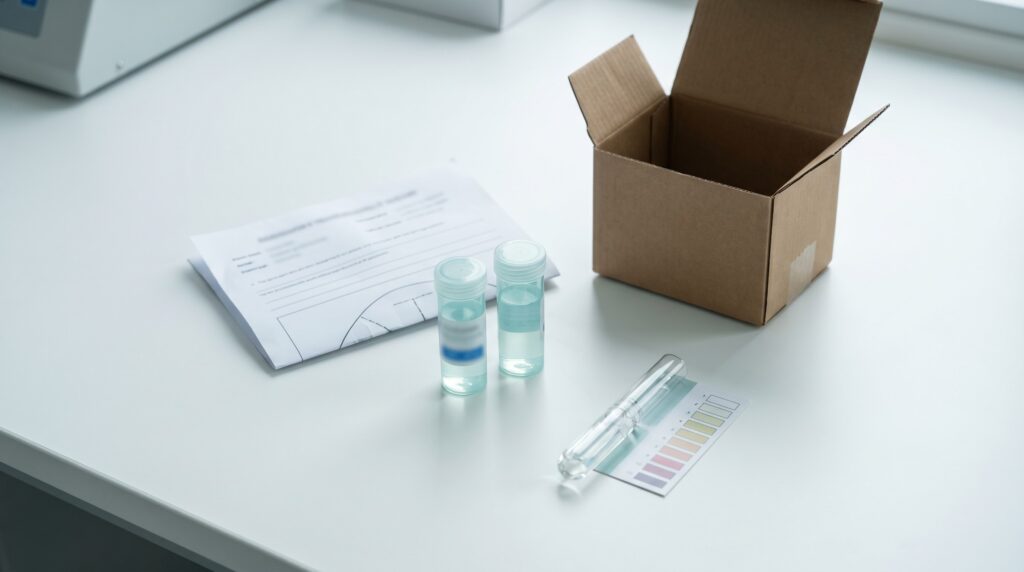
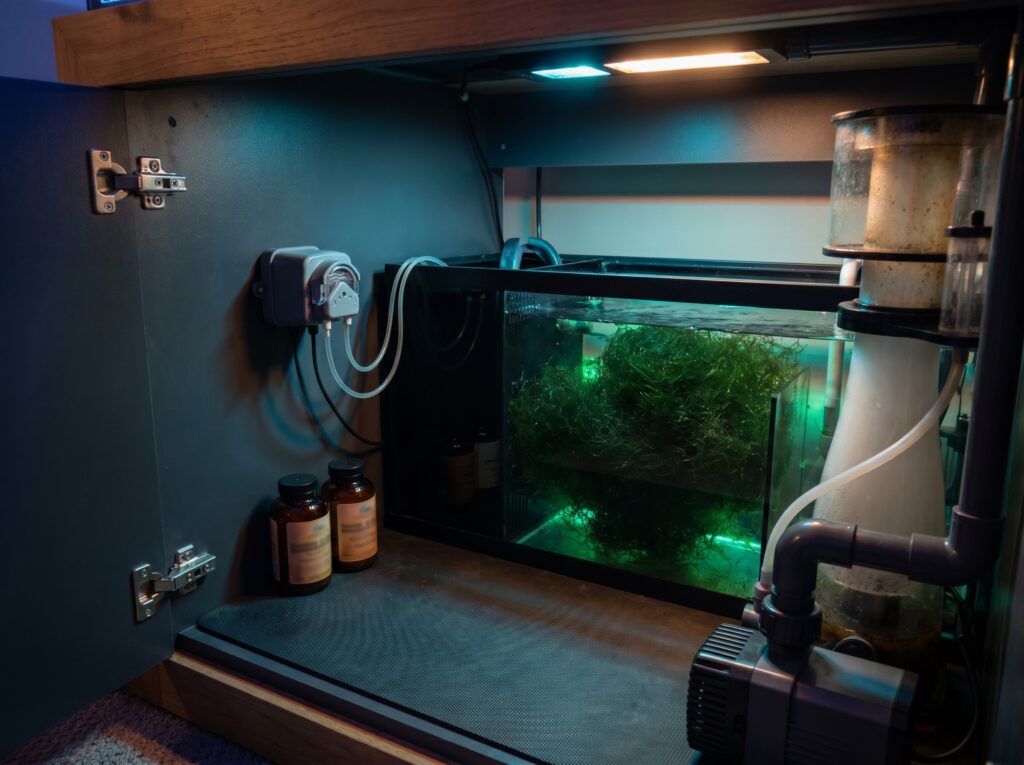
The TRITON Method is the most documented no-water-change system. It replaces the dilution function of water changes with three components working together: a standardized three-chamber sump with a mandatory algae refugium for nutrient export, targeted supplementation (Core7 Flex base elements plus optional MYTE trace supplements), and regular ICP-OES water analysis. TRITON's ICP tests measure 45 parameters at parts-per-billion precision - "far beyond home test kits that only reveal 5-8 parameters." The refugium is not optional in this system. ATI takes a similar approach, with ICP analysis covering up to 50 parameters; they recommend testing every two to three months "in addition to consistently testing the basics on your own."
Here is what makes these methods genuinely advanced. ICP testing costs money and takes days to return results. Until you get results back, you are flying blind on trace elements. Dosing individual or blended supplements based on those results requires you to understand what each number means, what target ranges are appropriate for your specific coral mix, and how fast your tank consumes each element. A dosing error - too much of one element, not enough of another - can stress or kill corals in ways that look like a mystery disease. The consequences of getting it wrong are higher than they are with water changes, where the worst outcome from a properly matched, properly temperature-adjusted change is usually nothing.
Aquarium Specialty's guide to no-water-change reef keeping is direct: these methods "may not be right for you" if you are a beginner, and they recommend that new aquarists stick with traditional water changes instead. That is the correct call.
There is also one thing none of these methods handle well without water changes: a tank that has already accumulated a heavy DOC load or imbalanced ion ratios. No dosing system removes what has built up. You add to correct deficiencies; water changes remove what has accumulated. In practice, even committed no-water-change keepers often do a dilution water change once or twice a year to reset the baseline.
What this means for your tank right now
If your tank has not yet been running long enough to be considered stable and mature - typically at least a year, and often longer for a mixed reef with demanding SPS corals - or if you are not yet running ICP testing and a dedicated refugium, do regular water changes. A 10% change every week is the standard starting point - enough to export nutrients, top up trace elements, and dilute organics without stressing your inhabitants with a big chemistry swing all at once. For most beginner and intermediate tanks, this single habit prevents more problems than any piece of equipment you could buy.
The step-by-step process for mixing and executing a water change safely is in the how to do a reef tank water change guide. For mixing your own saltwater correctly, see how to mix saltwater. And to understand the full parameter picture your water changes are maintaining, water parameters covers the numbers in detail.
Two things that make water changes work better: always use RODI water (never tap, which introduces silicates, chloramine, and phosphate), and match the salinity and temperature of your new water to your tank before it goes in. A swing of more than 0.002 SG (the widely accepted community rule of thumb) or more than 2 degrees F is stressful to corals and inverts.
One more thing worth knowing: stability matters more than the exact percentage. A consistent 10% every week beats an occasional 25% change done irregularly. Your corals adapt to the chemistry they live in; sudden large swings - even of clean saltwater - can cause more stress than a slightly elevated nitrate would.
Frequently asked questions
Can I skip water changes if my parameters test fine?
Standard home test kits check five to eight parameters. Dissolved organics, accumulated ionic imbalances, and many trace elements are invisible to them. A tank can test "fine" on nitrate, phosphate, calcium, alkalinity, and magnesium while still accumulating DOC and depleting trace elements that only ICP analysis would catch. Regular water changes protect against what you are not measuring.
How much water should I change and how often?
For most reef tanks - especially newer or still-maturing systems - 10% every week is the widely accepted starting point. Seachem recommends 20% every two weeks as an alternative cadence. Both approaches deliver similar monthly totals. The key is consistency: small, regular changes keep chemistry stable better than large, infrequent ones.
Does a protein skimmer replace water changes?
A skimmer removes dissolved organics before they break down into nitrate and phosphate, which reduces the load on your system. But skimming alone handles only a portion of DOC removal and does nothing to replenish depleted trace elements, calcium, alkalinity, or magnesium. Skimming and water changes do different jobs and work best together. See the protein skimmers explained article for details on what skimmers remove.
What salt mix should I use for water changes?
Use a reef-grade salt (Tropic Marin Pro-Reef, Red Sea Coral Pro, Seachem Reef Salt, or similar) rather than a fish-only or budget salt. Reef salts are formulated to include the full spectrum of trace elements, with calcium, magnesium, and alkalinity targeted at reef parameters. The best salt mix for a reef tank guide compares the main options.
When can I move to a no-water-change system?
Once you have a stable, fully mature tank - where parameters hold steady on their own and biology is well established - a proper refugium running macro-algae, a dosing pump setup, and access to regular ICP testing, a no-water-change method becomes viable. Neither TRITON nor any other system documentation specifies a fixed month threshold; the practical prerequisite is demonstrated stability, not a calendar date. It is a significant commitment in knowledge, equipment, and ongoing testing costs - not a shortcut. Most hobbyists find that regular small water changes remain the simpler, lower-risk approach long-term.