Fish-only vs reef tank: FOWLR explained for beginners (and why the middle option might be your best move)
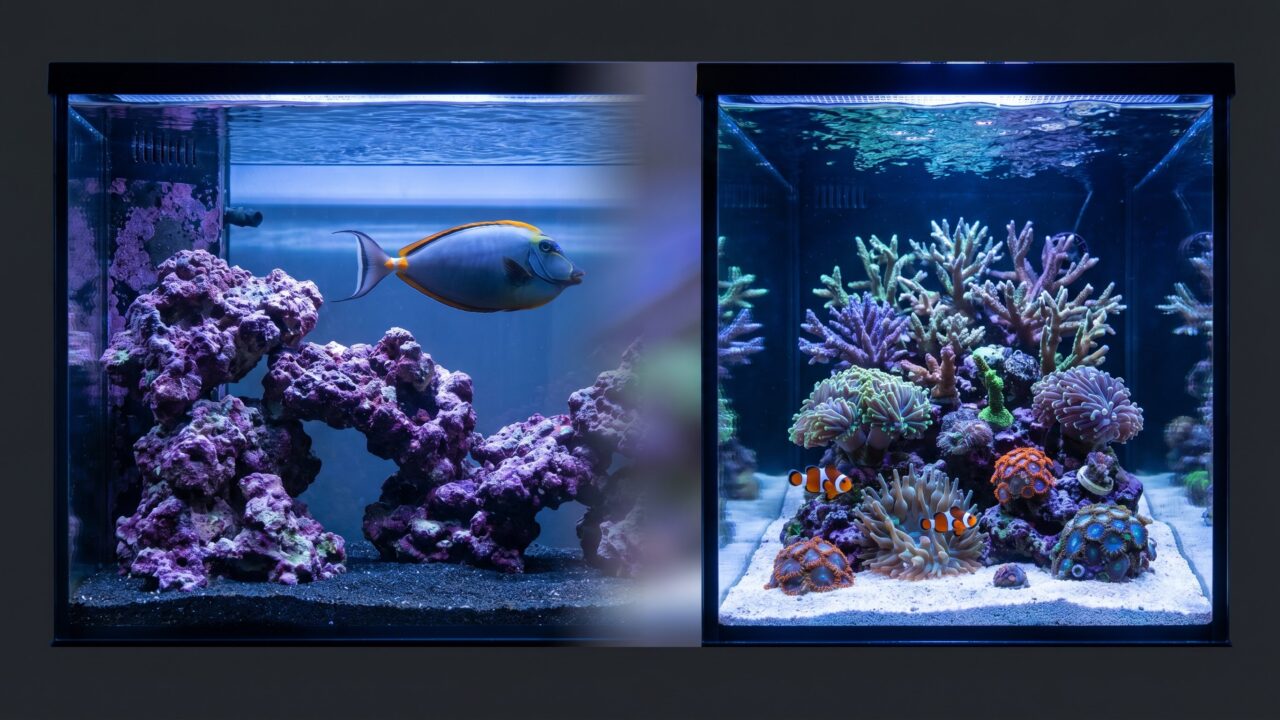
Choosing between a fish-only tank, a FOWLR, and a full reef is one of the first real decisions you make in this hobby - and each answer carries a different price tag, a different workload, and a very different list of fish you can keep. A fish-only (FO) tank is the cheapest and most forgiving entry point. A reef is the most demanding and most expensive. FOWLR (fish only with live rock) sits in the middle as a capable stepping stone toward either goal - and most beginners who are honest about their schedule end up happiest starting there.
What each setup actually means
A fish-only (FO) tank is exactly what it sounds like: marine fish, a heater, basic filtration, and perhaps some artificial decor or bleached coral skeletons. No live rock, no invertebrates, no corals. The biology relies entirely on your filter media to process ammonia and nitrite through the nitrogen cycle. Every new marine tank goes through this cycle - expect 2-8 weeks before levels stabilize, plus a normal ugly phase of diatom and algae growth that clears on its own. It is the cheapest way in, but you lose a lot in return - no natural biological buffering, no live habitat for the fish, and no upgrade path to reef without starting over.
A FOWLR adds live rock to that picture. The rock brings beneficial bacteria, small worms, pods, and coralline algae. It becomes part of the biological filter, helps buffer pH swings, and gives fish shelter and territory. LiveAquaria describes FOWLR as "a blend or a stepping stone that bridges FO aquariums and reef aquariums" - and that framing is accurate. You still keep non-reef-safe fish if you want them. You still skip expensive coral lighting and calcium dosing. But your water stays more stable than a bare fish-only setup, and when you are ready to go further, most of what you built carries over.
A reef tank shifts the priorities entirely. Corals and other photosynthetic invertebrates become the centerpiece. The fish list shrinks to species that will not eat or harass sessile animals. And the equipment list grows - high-output lighting, tighter chemistry control, dosing or a calcium reactor for the big three (calcium, alkalinity, magnesium), and a protein skimmer that keeps up with the bioload. LiveAquaria calls a reef "the most challenging and expensive of the marine aquariums," and that assessment holds. See our overview of what the difference between a marine tank and a reef tank means in practice.
The three-way comparison
The table below maps the practical differences across all three setups for a typical 50-75 gallon display. Numbers are representative ranges based on current equipment pricing and established husbandry guidance.
| Factor | Fish-only (FO) | FOWLR | Reef |
|---|---|---|---|
| Startup cost (50-75 gal) | ~$600-$900 | ~$900-$1,500 | ~$2,000-$4,500+ |
| Monthly running cost | ~$30-$60 | ~$40-$80 | ~$75-$200+ |
| Lighting | Basic fluorescent or budget LED ($40-$80); aesthetics only | Basic LED in 8,000-12,000K range ($80-$150); enhances fish colors | Reef-grade LED with blue spectrum at 450-485 nm ($300-$1,500+); must support coral photosynthesis |
| PAR requirement | Not applicable | Not applicable (no photosynthetic organisms) | 50-100 PAR for soft/LPS; 400+ PAR for SPS |
| Nitrate tolerance | Up to 30-40 ppm (hardy fish) | Up to 20-30 ppm | <5 ppm for SPS; <10 ppm for soft corals/LPS |
| Calcium / alkalinity dosing | Not needed | Not needed (regular water changes suffice) | Essential for stony corals; often requires dosing pump or calcium reactor |
| Protein skimmer | Recommended but optional | Recommended | Required |
| Fish selection freedom | Maximum - all non-venomous marine fish | High - triggers, puffers, lions, large angels, eels | Limited - reef-safe species only |
| Copper treatment (for ich, velvet) | Possible in display tank (no inverts) | Only in a separate quarantine tank | Never in display tank - lethal to all invertebrates and corals |
| Upgrade path | Difficult - must add live rock, may need to restock fish | Straightforward - upgrade lighting, tighten chemistry, add corals | N/A (already there) |
| Beginner forgiveness | High (but less stable than FOWLR) | High - live rock buffers swings | Low - parameter swings harm corals quickly |
Why fish selection is the main reason people choose FOWLR
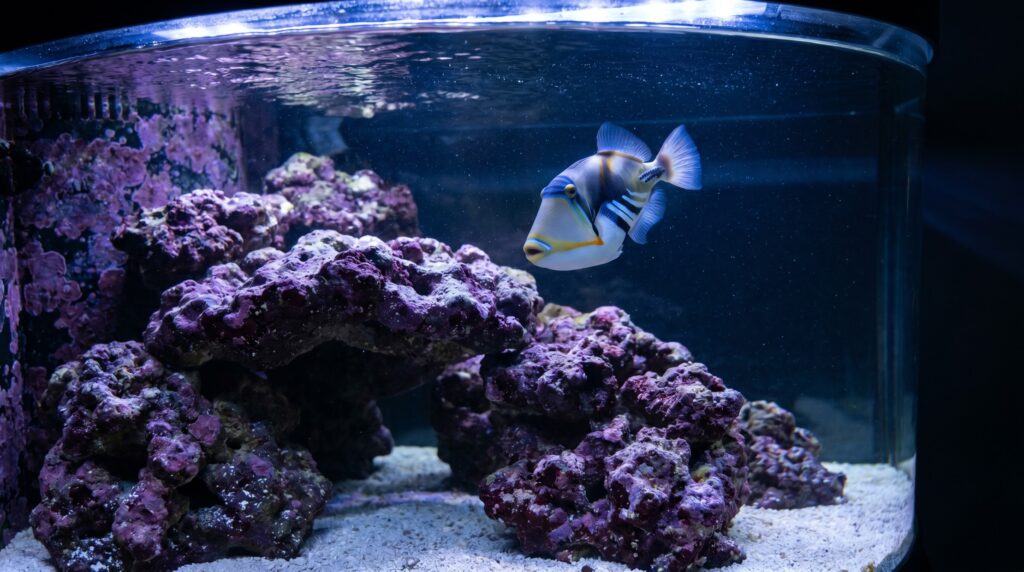
Reef tanks ask you to give up an entire class of fish. Triggerfish, porcupine puffers, most large angelfish, lionfishes, groupers, moray eels - none of them belong in a reef. Triggerfish, for instance, "naturally nip at corals and invertebrates" (PetMD) and cannot be trusted around anything sessile, regardless of how peacefully a juvenile behaves. A Volitan lionfish reaches up to 15 inches and will eat anything that fits in its mouth. These are genuinely spectacular animals, and they are flat-out unavailable to reef keepers.
FOWLR keeps that door open. You get the live rock, the stable chemistry, the coralline algae on the rock face, and you still get to keep a Niger trigger or a Volitans lion as the centerpiece. Many experienced marine aquarists run dedicated FOWLR predator tanks for exactly this reason - not because they cannot afford a reef, but because they genuinely prefer the fish.
The constraint is tank size. These fish grow large. Triggerfish adults need at least 125 gallons. A porcupine puffer reaching 20 inches needs at least 180 gallons. Plan the tank around the full-grown animal, not the juvenile in the store. For a look at stocking numbers and tank sizing before committing, see our guide on choosing marine fish and the article on how many fish a tank can support.
The chemistry difference is real but manageable
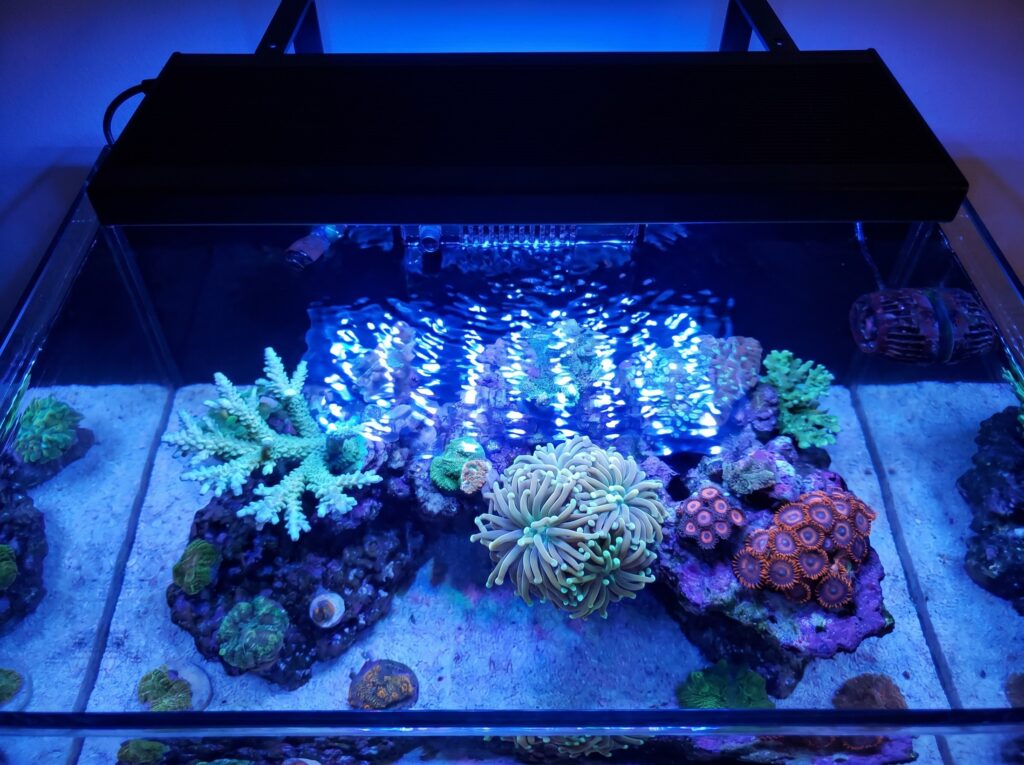
The most underappreciated gap between FOWLR and reef is not equipment - it is chemistry tolerance. In a FOWLR, nitrates below 20 ppm are a reasonable target. In a reef, SPS corals like Acropora thrive at 1-5 ppm and deteriorate noticeably above 10 ppm. That gap means roughly twice or three times the water-change frequency, or a refugium, or a biopellet reactor to export nutrients - all of which add cost and time.
Calcium and alkalinity tell the same story. A FOWLR has no stony corals consuming those minerals to build skeletons, so regular water changes with a quality salt mix replenish what little the system uses. Add SPS corals and those numbers swing noticeably between changes - you will need either a two-part dosing regimen or a calcium reactor to keep pace. This is why FOWLR keepers who eventually upgrade to reef wish they had installed a protein skimmer and developed tight nutrient habits from day one: the discipline carries over even when the parameters shift. More detail on managing the big three is in our articles on reef tank alkalinity, calcium, and magnesium.
One practical FOWLR advantage that beginners often miss: copper-based medications are available to you. Copper effectively treats ich and marine velvet - Seachem Cupramine, the standard chelated copper product, targets a final level of 0.5 mg/L in saltwater - but it is lethal to invertebrates at 0.03 mg/L for shrimp, and scientific review finds coral toxicity thresholds as low as 0.65 µg/L. Once copper absorbs into live rock and substrate it leaches back out for weeks, permanently disqualifying that rockwork from a future reef. In a FOWLR or FO tank with a dedicated quarantine setup, you retain this treatment option. In a reef, you do not. Quarantine remains best practice regardless of tank type, but the treatment toolkit in a reef is narrower.
FOWLR as a stepping stone: the upgrade path
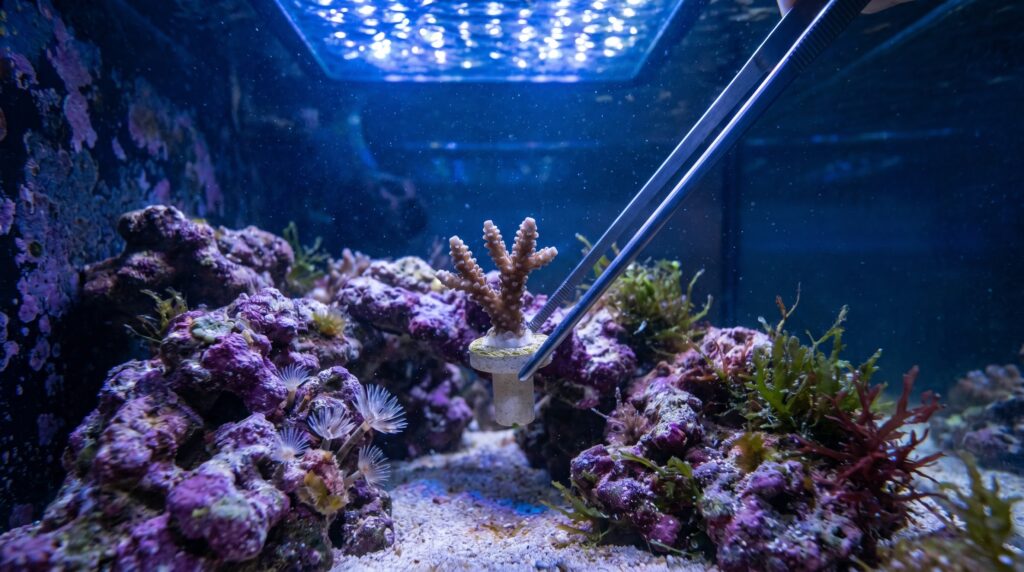
The practical appeal of FOWLR is that very little of your investment becomes wasted when you decide to move toward reef. Here is the honest sequence:
- Lighting. Swap the basic LED for a reef-grade fixture capable of delivering 100-300+ PAR. Budget $300-$800 for a mid-range unit adequate for soft corals and LPS - lighting is usually where the biggest single check gets written.
- Chemistry habits. Start testing calcium, alkalinity, and magnesium regularly. Tighten nitrate to under 10 ppm through improved skimming or a refugium. Your FOWLR live rock already hosts the denitrifying bacteria you need - it just needs the nutrient export side to improve.
- Fish audit. Non-reef-safe residents (triggers, puffers, large angels) need to be rehomed or moved to a separate fish-only system before the first corals go in. This is the hardest step emotionally and the one most keepers underestimate.
- Start with soft corals. Mushrooms, zoanthids, and leathers tolerate imperfect water and lower light. Get one frag, watch how the system responds for a few weeks, then add more. Never rush stocking in a reef.
- Add dosing or two-part when stony corals arrive. Water changes alone can maintain soft-coral chemistry. Add LPS and the calcium/alkalinity draw increases. Add SPS and you will almost certainly need a more consistent supplementation method.
The live rock you built your FOWLR around? It stays. The sump, the return pump, the skimmer, the RODI unit - all of it carries over. The upgrade is real but it is not starting from scratch. For a full rundown of what the first reef setup actually needs, see our getting started guide and the cost breakdown for reef builds at different sizes.
Which setup is right for you
Pick FO if you are genuinely unsure whether you will stay in the hobby, have a tight budget (under $600 all-in), or want to experiment with basic marine care without committing to live rock management.
Pick FOWLR if you want a capable, stable system that gives you maximum fish choice and a clear path forward if you ever want corals. It is the most versatile starting point for most new marine keepers.
Pick reef from day one only if you already know you want corals as the centerpiece, you have a realistic budget for proper lighting and water testing, and you are willing to keep a tighter fish list. Going reef-first is not wrong - but going reef-first with the wrong fish, wrong lighting, or wrong patience level is where most beginner failures start. The reef tank mistakes article covers the common ones in detail.
Frequently asked questions
Can I add corals to a FOWLR tank without changing anything?
Not successfully. Soft corals need at least moderate PAR (50-100), and your FOWLR lighting likely delivers far less. Nitrates also need to come down below 10 ppm. Start by upgrading lighting, then tighten water quality before adding any coral frags. Non-reef-safe fish in the tank must be rehomed first.
Is a FOWLR harder to maintain than a regular fish-only tank?
Slightly, mainly because live rock costs more upfront and the cycling period takes longer (2-8 weeks). Once established, FOWLR is actually more stable than a bare fish-only setup because live rock provides biological filtration and helps buffer pH swings. Day-to-day maintenance is comparable - weekly parameter tests and regular water changes.
Can I keep a porcupine puffer in a FOWLR tank?
Yes, porcupine puffers are classic FOWLR fish. They are intelligent, personable, and completely incompatible with corals or inverts. Plan for a minimum 180-gallon system at adult size (up to 20 inches). Start them in a larger tank from the beginning - they grow faster than most keepers expect.
What live rock ratio should I aim for in a FOWLR?
Aim for 1-2 pounds of live rock per gallon of tank volume. This gives you enough surface area for the beneficial bacteria that process ammonia and nitrite, as well as some denitrification capacity in the rock's anaerobic interior. Under-rockscaping is one of the most common FOWLR setup mistakes.
If I treat my FOWLR fish with copper, can I ever add corals later?
No - not with that same rock and substrate. Copper absorbs into porous live rock and leaches back out for weeks to months. At coral-toxic concentrations (as low as 0.65 µg/L), even trace levels will prevent you from keeping invertebrates. Always treat fish in a dedicated bare quarantine tank, never in the display.