What a reef tank really costs to start and run: an itemized breakdown by size
Somewhere between $600 and $4,500 is where most beginners actually land when they set up their first reef tank – and neither number is wrong. The gap comes from tank size, equipment quality, and one silent budget killer almost nobody warns you about up front: gear churn. That’s the pattern of buying a light, realizing it’s too dim for corals six months in, selling it at a loss, and buying the right one anyway. Buy twice, spend 40% more. This guide puts real line items behind each size class so you can plan for the actual number, not the optimistic one.
Every figure below is a mid-range estimate using current retail pricing on real products. Budget builds and premium builds exist at both ends – the table below captures the middle lane that most reef keepers end up in.
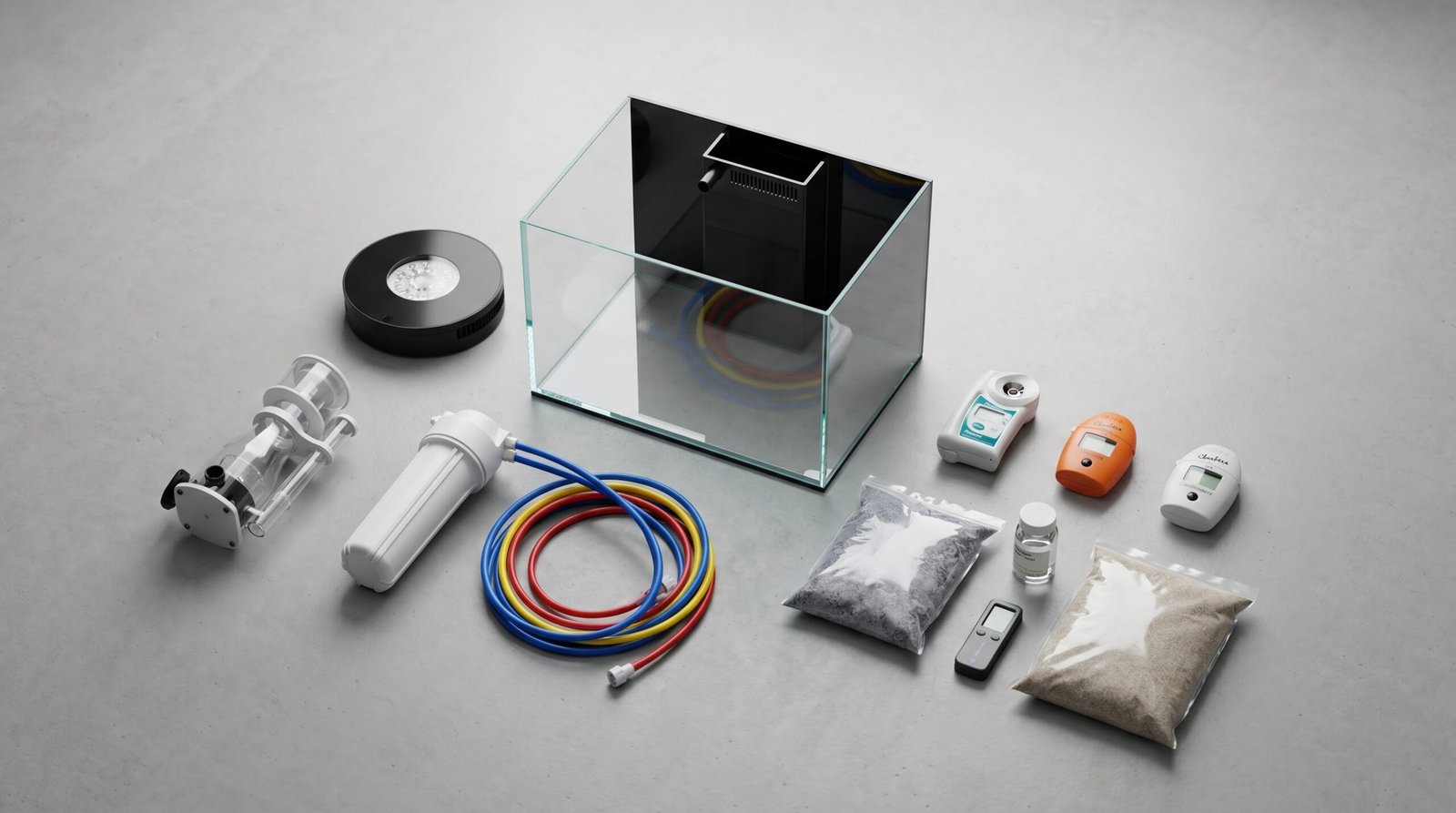
What you’re actually buying: the core equipment list
A reef tank isn’t just a fish tank with salt water. Corals need stable chemistry, strong water movement, and intense light – which means the equipment list is longer and more expensive than a freshwater setup. Here’s what every reef tank requires, regardless of size.
- Tank and stand – the display vessel plus structural support
- Lighting – reef-capable LED (not the light bundled with a freshwater kit)
- Flow – a wavemaker or powerhead to move water across corals
- Filtration – sump or rear chamber, return pump, and usually a protein skimmer
- Heater – sized at roughly 3-5 watts per gallon; two smaller units beat one large one on tanks above 50 gallons
- RODI water system – or a regular RODI water purchase; tap water carries silicates, chloramine, and phosphates that feed algae and crash reef chemistry
- Salt mix – reef-grade; not generic “aquarium salt”
- Test kits or colorimeters – alkalinity, calcium, magnesium, nitrate, phosphate; accuracy matters here
- Refractometer – digital or optical; a swing-needle hydrometer gives readings that are off by enough to matter
- Live or dry rock – the biological filter and aquascape structure
- Sand – optional but standard; 1-2 inch sand bed for most builds
Optional but common early additions: an auto top-off (ATO) unit to replace evaporation automatically, a dosing pump for two-part alkalinity and calcium supplements, and a hang-on-back or in-sump protein skimmer. For small tanks under 25 gallons you can skip the skimmer if you do more frequent water changes – the nutrient export happens via water changes instead. Above that, a skimmer earns its cost quickly.
Full equipment explanations are in the what do I need to start a reef tank guide if you want the reasoning behind each item.
Startup cost table by tank size
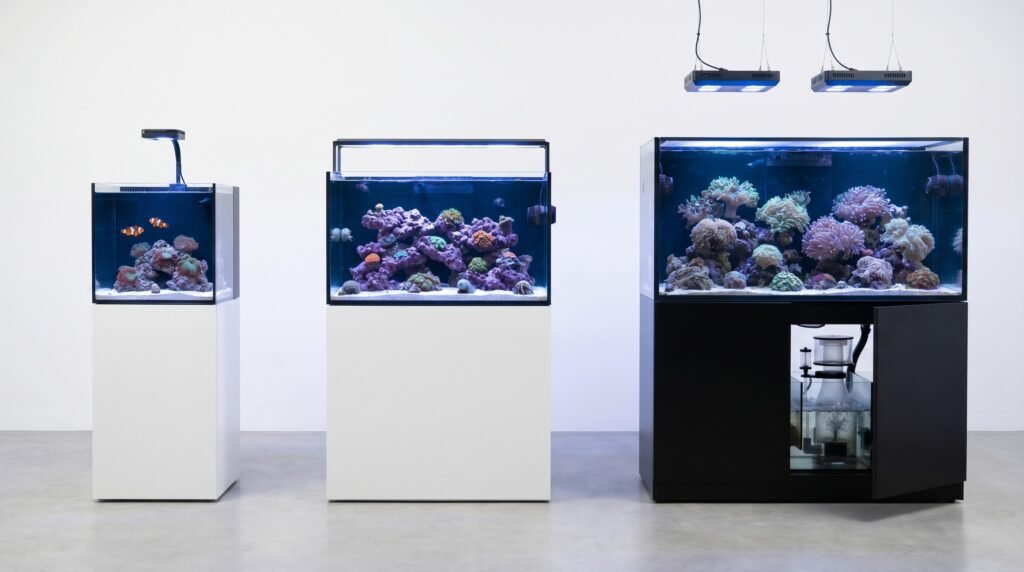
The table below covers hardware only – no livestock, no salt, no consumables. It uses three tiers within each size: a budget path (used or entry-level gear), a mid-range path (the most common beginner choice), and an upgrade path (quality-first purchases that rarely need replacing). AIO means all-in-one tank with a built-in rear filtration chamber; sump-based means a separate sump under the stand.
| Tank size | Setup style | Tank + stand | Lighting | Flow | Filtration + skimmer | Heater | RODI unit | Test gear | Rock + sand | Total hardware |
|---|---|---|---|---|---|---|---|---|---|---|
| 10-15 gal nano AIO | Budget | $150 | $100 | $30 | $0 (no skimmer) | $30 | $0 (buy water locally) | $60 | $50 | ~$420 |
| 10-15 gal nano AIO | Mid-range | $200 (Fluval Evo 13.5) | $220 | $55 | $130 (HOB skimmer) | $40 | $180 (NU Aqua 100GPD) | $150 | $80 | ~$1,055 |
| 20-25 gal AIO | Budget | $250 | $150 | $45 | $0 (no skimmer) | $40 | $0 (buy water locally) | $80 | $80 | ~$645 |
| 20-25 gal AIO | Mid-range | $290 (Waterbox AIO 20) | $300 | $70 | $260 (skimmer) | $50 | $180 | $200 | $110 | ~$1,460 |
| 30-35 gal AIO | Mid-range | $560 (Waterbox AIO 35.2) | $350 | $90 | $320 (skimmer + return) | $55 | $180 | $200 | $150 | ~$1,905 |
| 30-35 gal AIO | Upgrade | $560 | $636 (EcoTech XR15 G6 Pro) | $150 | $430 (skimmer) + $110 (return) | $65 | $180 | $300 | $150 | ~$2,581 |
| 55-75 gal sump-based | Mid-range | $600 (tank + basic stand) | $700 (two mid-range LEDs) | $150 | $400 (sump) + $330 (skimmer) + $170 (return pump) | $80 | $180 | $250 | $250 | ~$3,110 |
| 75-90 gal sump-based | Mid-range | $800 (tank + stand) | $900 (two quality LEDs) | $200 | $500 (sump) + $430 (skimmer) + $170 (return pump) | $100 | $200 | $300 | $320 | ~$3,920 |
| 75-90 gal sump-based | Upgrade | $1,700 (Red Sea Reefer 170 G3) | $1,270 (two XR15 G6 Pro) | $300 | $600 (skimmer) + $600 (Vectra M2 return) | $120 | $200 | $300 | $320 | ~$5,410 |
A note on the RODI column: if you can buy purified RODI water locally at around $0.35-$0.50 per gallon, a small tank is cheaper to fill externally for the first year or two. A 15-gallon tank with 10% weekly water changes uses only about 75-80 gallons per year – the break-even on a $180 home unit is around 400-500 gallons. Larger tanks tip the math quickly. The RODI systems for reef tanks guide covers the full calculation.
What livestock and consumables add in year one
Hardware is only part of what you spend in year one. A fully stocked reef tank requires salt, test reagents, food, cleanup crew, fish, and corals – and most of that spending is front-loaded because you’re building the ecosystem from nothing.
Consumables (first 12 months)
| Item | Small nano (10-15 gal) | Mid (25-35 gal) | Larger (60-90 gal) | Notes |
|---|---|---|---|---|
| Salt mix (reef-grade) | $40-60 | $80-120 | $180-220 | Red Sea Coral Pro 200-gal bag ~$60-65; Tropic Marin Pro-Reef similar |
| Test reagents / checker reagents | $30-50 | $50-80 | $80-120 | Hanna checker reagents ~$12-15 per 25-test pack |
| Two-part dosing (alk + calcium) | $0 (water changes only) | $30-60 | $60-120 | Begins once corals consume parameters faster than water changes replenish |
| Food (fish + coral) | $30-50 | $50-80 | $80-120 | Pellet + frozen mix; corals need specific amino acid supplements as collection grows |
| Electricity (year 1) | $50-120 | $120-200 | $250-400 | LED lights + heater + pumps; varies widely by region ($0.12-$0.35/kWh nationally) |
| Replacement filter media, carbon | $20-30 | $30-50 | $60-100 | Filter socks, activated carbon, GFO optional |
| Consumables subtotal | $170-310 | $360-590 | $710-1,080 |
Livestock (first 12 months)
Livestock spending is the hardest to nail down because it depends on ambition. A tank with two clownfish, a small cleanup crew, and half a dozen soft corals costs far less than one chasing SPS and rare fish. The figures below assume a moderate approach – a few fish, a proper cleanup crew, and beginner-friendly corals added gradually over six to twelve months.
| Item | Small nano (10-15 gal) | Mid (25-35 gal) | Larger (60-90 gal) | Notes |
|---|---|---|---|---|
| Cleanup crew | $25-40 | $50-80 | $80-150 | Hermit crabs, nassarius and cerith snails, a turbo or two |
| Fish (2-3 species) | $60-120 | $120-250 | $200-400 | Pair of captive-bred ocellaris clownfish $50-60; other beginner fish $20-50 each |
| Corals (beginner soft + LPS frags) | $80-150 | $150-300 | $300-600 | Mushrooms, zoanthids, leathers $10-50 per frag; added slowly over several months |
| Livestock subtotal | $165-310 | $320-630 | $580-1,150 |
First-year totals (hardware + consumables + livestock)
| Tank size / path | Hardware | Consumables | Livestock | Year-one total |
|---|---|---|---|---|
| 10-15 gal, budget path | ~$420 | ~$200 | ~$200 | ~$820 |
| 10-15 gal, mid-range path | ~$1,055 | ~$240 | ~$240 | ~$1,535 |
| 20-25 gal, mid-range path | ~$1,460 | ~$475 | ~$475 | ~$2,410 |
| 30-35 gal, mid-range path | ~$1,905 | ~$475 | ~$475 | ~$2,855 |
| 30-35 gal, upgrade path | ~$2,581 | ~$475 | ~$475 | ~$3,531 |
| 60-90 gal, mid-range path | ~$3,500 | ~$895 | ~$865 | ~$5,260 |
These are conservative estimates for someone who does not lose livestock and doesn’t make major equipment errors. Real first years often run 10-20% higher. After year one, running costs drop significantly – you’re buying consumables and adding livestock incrementally rather than purchasing all the hardware at once. The ongoing monthly picture is covered in the reef tank running costs per month breakdown.
Where beginners actually blow the budget
The single biggest source of avoidable spending is buying something cheap that turns out to be inadequate, selling it at a loss (used gear sells for 40-60 cents on the dollar), and then buying the right thing. Over a year, that cycle can easily add $300-800 to the total. Here’s where it happens most often.
Underpowered lighting
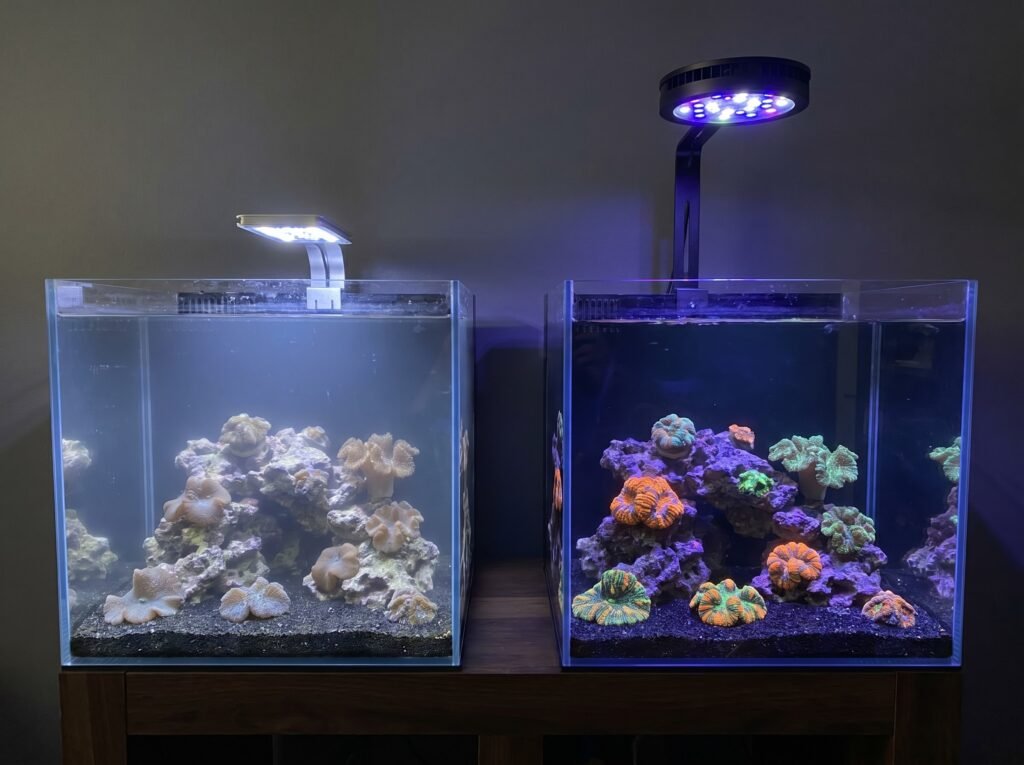
This is the most common double-purchase in reef keeping. Entry-level LED fixtures bundled with all-in-one kits are often fine for fish and a few low-light soft corals, but they won’t support most LPS or any SPS. The moment a beginner catches the coral bug – which is most of them – the light has to go. Buying a reef-capable fixture from the start costs more upfront but eliminates the upgrade. The difference between a $150 clip-on and a $300-400 programmable reef LED is worth the math before you buy.
A concrete example: a mid-range 24″x24″ fixture like the EcoTech Radion XR15 G6 Pro retails at $635.99 and runs 10+ years with no bulb replacements. T5 fluorescent fixtures cost less initially but require bulb replacements every 10-12 months; four 54-watt T5 bulbs at $20-30 each add $80-120 per year indefinitely. The economics favor quality LED over a four-to-five year horizon. For guidance on what lights actually deliver the PAR reef corals need, see best LED lights for a reef tank.
Undersized filtration
Return pumps rated for 10x turnover that actually deliver 5x once you account for head pressure. Protein skimmers sized for 50 gallons running on a 75-gallon system. These don’t fail dramatically – they just run the tank at a low simmer of excess nutrients, which eventually shows up as algae problems, coral recession, or both. Buying one size up from the minimum costs another $50-100 at purchase and saves you weeks of troubleshooting.
The upgrade spiral on controllers and dosers
A Neptune Apex controller system runs $560-975 depending on the model. That’s genuinely unnecessary for a first tank – manual dosing and basic timers work fine for a year or two. The mistake is buying a cheap controller that locks you into a proprietary ecosystem, then upgrading anyway. Either skip automation entirely at the start or budget for it properly the first time. A dosing pump for two-part costs $150-200 and makes sense once your coral load actually consumes alkalinity fast enough to matter; most nano tanks don’t hit that point in year one.
Livestock losses from skipping quarantine
This one isn’t equipment-related, but it’s real money. Marine ich (Cryptocaryon irritans) can wipe out a fish collection that cost $200-400 in livestock spending. A basic quarantine tank – a bare 10-gallon with a sponge filter and a heater, total cost around $80-100 – pays for itself the first time it catches a sick fish before it enters the display. The how to treat ich in a reef tank guide explains why copper-based treatments that work in a fish-only quarantine will destroy corals and invertebrates if used in the display tank.
Buying livestock too soon
Corals added to an uncycled or newly cycled tank die. Fish added before the nitrogen cycle completes suffer ammonia poisoning. These are straightforward money losses – a $50 coral frag added at week three of a new setup is often $50 wasted. Wait until the tank has finished its nitrogen cycle and passed through the ugly stage (diatom bloom, then possible cyano, then gradual stabilization). That’s usually 6-10 weeks minimum. The how to cycle a reef tank guide walks through the full timeline.
Where the budget is genuinely negotiable
A few places where spending less doesn’t hurt the tank:
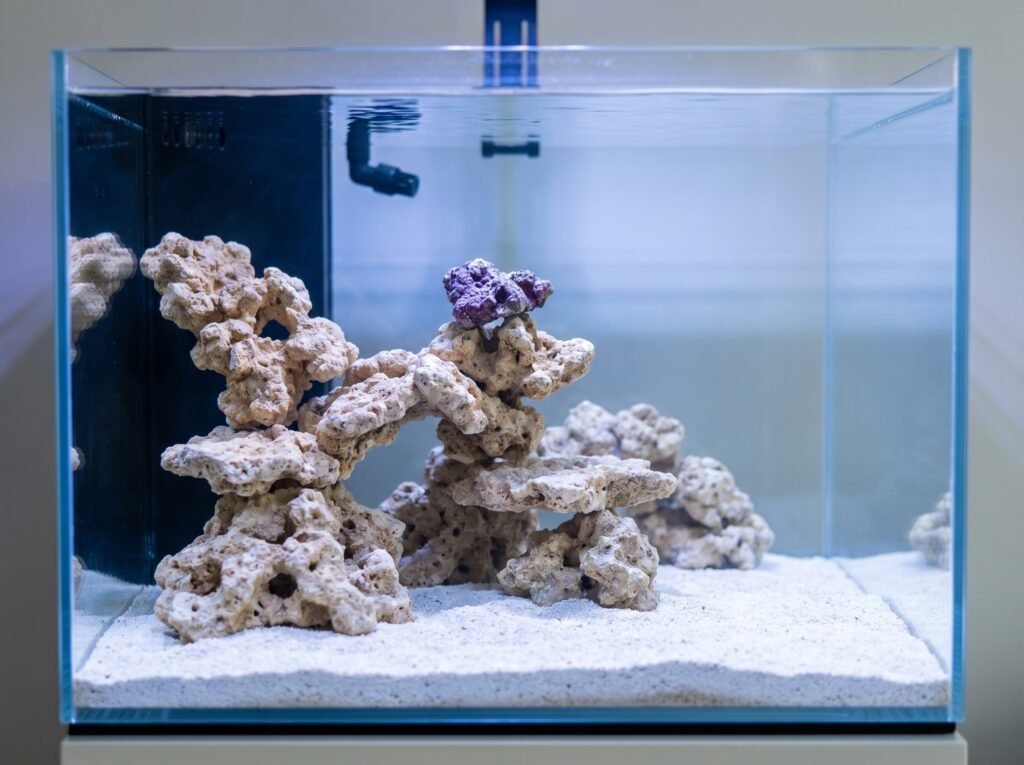
- Rock – dry rock at $3-4 per pound works perfectly as the biological filter base. You seed it with a small amount of live rock or a bottled bacteria product. Live rock at $8-12 per pound seeds faster but is not required. For a 25-gallon tank needing 25-30 lbs, that’s a $60-120 difference.
- Sand – dry aragonite sand is chemically identical to live sand for aquascape purposes. Live sand carries some beneficial bacteria but at 3-5x the price. For a 1-2 inch sand bed in a 30-gallon tank, you’re looking at 30-40 lbs; the savings are $30-60. Not large, but real.
- Test kits in year one – a basic API saltwater test kit at $25-30 covers ammonia, nitrite, and nitrate for cycling. You don’t need Hanna colorimeters for alkalinity and phosphate on day one. Add precise digital test tools as your coral load increases and parameter stability becomes critical. Starting simple keeps the learning curve manageable.
- Corals – frags from local reef clubs and swap events can cost $5-15 for pieces that would sell for $40-60 at a retailer. The quality is often equal or better, since local hobbyists propagate proven, acclimated pieces.
If cutting costs further is the primary goal, the cheapest way to start a reef tank covers used-equipment sourcing, DIY aquascape options, and the specific corners you can cut without compromising the tank long-term.
AIO kits vs. building from components
All-in-one tanks bundle the tank, rear filtration chamber, return pump, and sometimes a basic light in one purchase. They cost more per gallon of display volume than sourcing components separately, but they save setup time and eliminate the decision fatigue of matching a sump to a tank to a cabinet. For a first reef in the 10-35 gallon range, an AIO is almost always the right call.
Above 40-50 gallons, the value equation shifts. A sump-based system gives you more filtration capacity, easier equipment access, and room for a refugium. The Red Sea Reefer series (the 170 G3 at $1,699 for 33 display gallons, sump included) sits in between – it’s an integrated system with a purpose-built sump, but the skimmer, return pump, and light are all sold separately. That modular approach works well for intermediate builders who want a quality foundation without committing to specific brands for everything.
For a side-by-side look at the major AIO models across size classes, see reef tank kits compared.
Frequently asked questions
Is a $500 reef tank actually possible?
A very basic nano setup – used 10-15 gallon tank, simple LED, a few fish and soft corals – can come in under $600 in hardware. Achieving it means buying used gear and skipping a protein skimmer, RODI unit, and most automation. It works, but requires more hands-on water changes and close attention to chemistry. The livestock and consumables for year one add another $350-450 on top of hardware.
Why do people say reef tanks are expensive if a $500 setup exists?
Because most people don’t stay at $500. The hobby has a pull toward bigger tanks, better lighting, and more coral – and each of those costs money. A $600 nano frequently becomes a $1,500-2,000 system inside 18 months as the keeper upgrades. The real cost of reef keeping includes the upgrade path, which most starter-cost articles don’t show.
How much does monthly maintenance cost after setup?
Consumables – salt, test reagents, carbon, food – run roughly $25-60 per month for a small-to-mid reef tank. Add electricity ($15-40 depending on tank size and local rates) and occasional livestock additions, and most keepers spend $50-120 per month in steady state. Larger tanks with heavy coral loads requiring dosing can run $150-200 per month.
What is the biggest hidden cost in reef keeping?
Gear churn from buying equipment twice. Entry-level lights, undersized skimmers, and cheap wavemakers get replaced more often than not within 12-18 months. The combined loss from buying, using briefly, and reselling at 40-60 cents on the dollar – then buying correctly – can add $400-800 to a beginner’s actual first-year spend compared to buying right the first time.
Do I need a sump to start a reef tank?
No – AIO tanks with rear filtration chambers handle everything a small sump would do for tanks up to about 35-40 gallons. A dedicated sump becomes more useful above that size, where the extra filtration volume, refugium space, and equipment placement options genuinely matter. Most beginner builds work fine without one.
The SteadyReef team
We write calm, plain-English reef-keeping guides. Every claim is checked against the marine-science and manufacturer sources listed above before publishing.