The best LED lights for a reef tank, sorted by budget and coral type
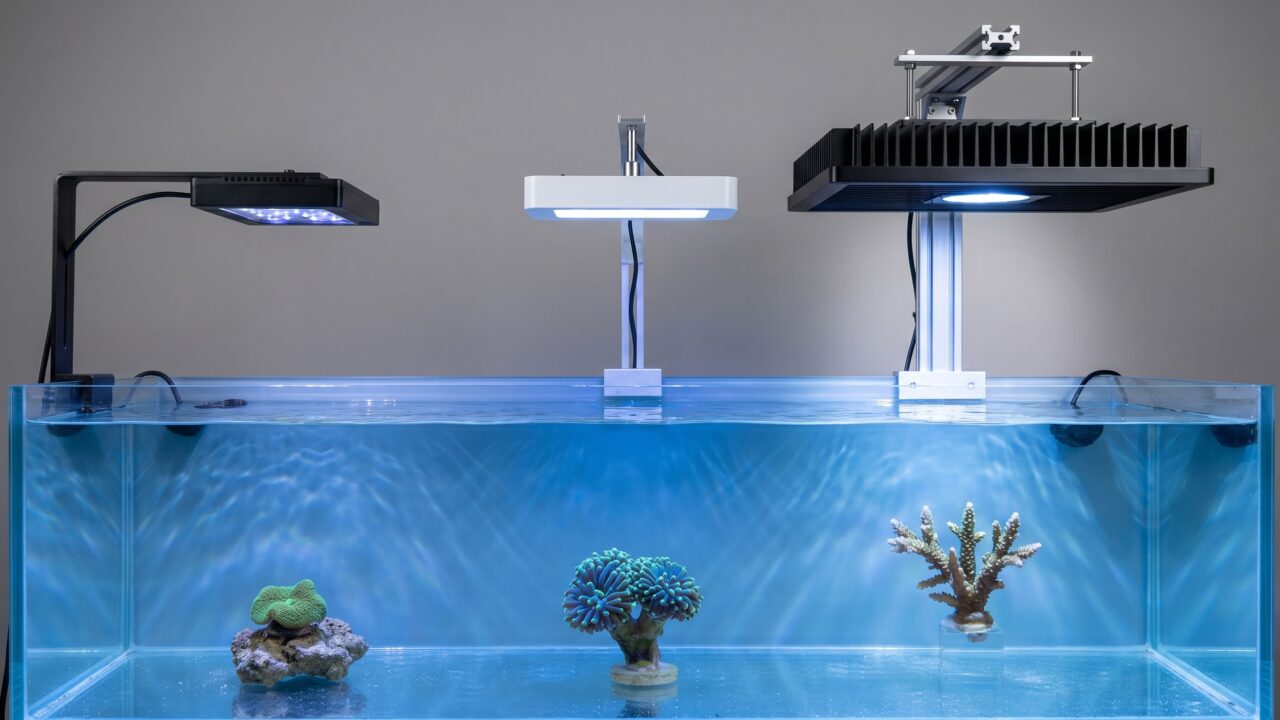
Spend $80 on a black-box LED and your softies will probably survive. Spend $1,200 on a Radion and your Acropora will have the light it needs to thrive. The gap between those two outcomes is real, and it comes down to three things: how much usable light (PAR) reaches your corals at depth, how evenly that light spreads across the footprint, and how precisely you can control it. This guide breaks down each price tier honestly - what you get, what you give up, and which tier actually fits your tank and goals.
If you want the fast version: budget black-box lights work for soft corals and some LPS when mounted correctly, but they come with real trade-offs in consistency and controllability. Mid-range fixtures hit the sweet spot for most mixed-reef beginners. Premium lights are justified if you're running SPS, a large system, or you want set-and-forget reliability over years. The comparison table below lets you match fixtures to your specific goals.
What PAR actually means for your corals
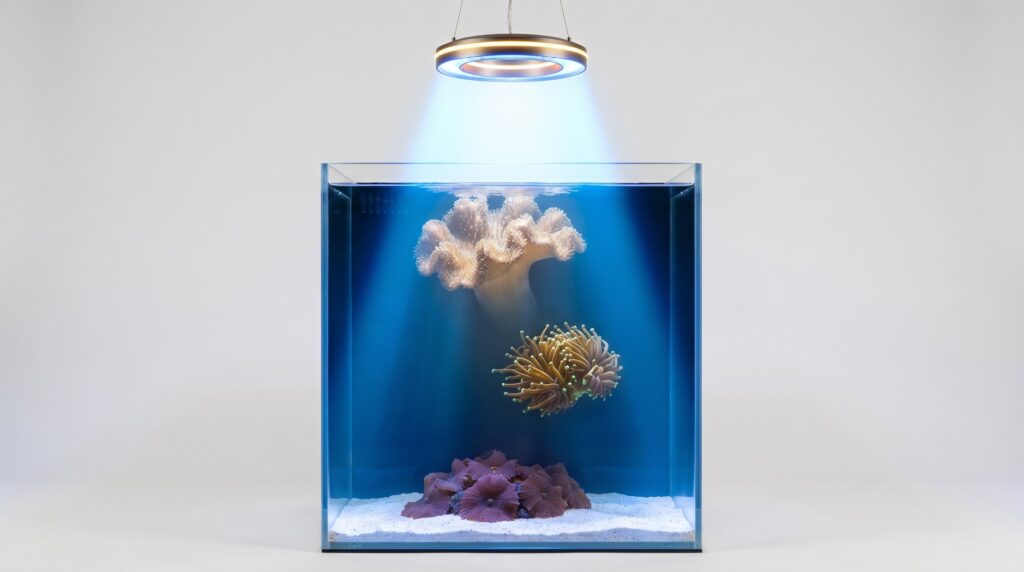
PAR stands for photosynthetically active radiation - it measures the quantity of light in the 400-700 nm range that drives photosynthesis in coral tissue. The unit is µmol/m²/s (micromoles of photons per square meter per second). Higher PAR is not automatically better; each coral type has a range it prefers, and too much light bleaches just as surely as too little. For a deeper look at how to measure PAR in your own tank, see our guide to PAR explained and how to measure it.
Research on Goniopora columna published in a peer-reviewed journal found that blue and violet wavelengths (400-470 nm) produced the highest coral growth and 100% survival rates compared to other light colors. Blue light penetrates water more efficiently than white, which is why well-designed reef fixtures weight their output heavily toward royal blue and violet channels. White light adds color rendition and depth perception for the viewer but matters less to the zooxanthellae doing the photosynthetic work.
Here are the working PAR targets practitioners use for coral placement:
| Coral type | Target PAR range (µmol/m²/s) | Notes |
|---|---|---|
| Mushrooms, leathers, Xenia | 50-150 | Tolerant; often placed lower in the tank |
| Zoanthids, palythoa | 50-150 | Wide tolerance; watch for bleaching above 200 |
| LPS (Hammers, Torches, Elegance) | 75-150 | Mid-column placement typical; most LPS show stress above 150-175 |
| Montipora, Stylophora, Pocillopora | 200-350 | Entry-level SPS; more forgiving |
| Acropora, Seriatopora | 300-500+ | Upper column; needs even spread |
Keep one thing in mind before you start placing corals: they acclimate to light over time. A coral that arrived from a low-light system can bleach at 250 PAR even if that level is well within its long-term range. Always introduce new corals at a lower position in the tank and move them up gradually over several weeks.
Budget black-box LEDs: what you get and what you give up
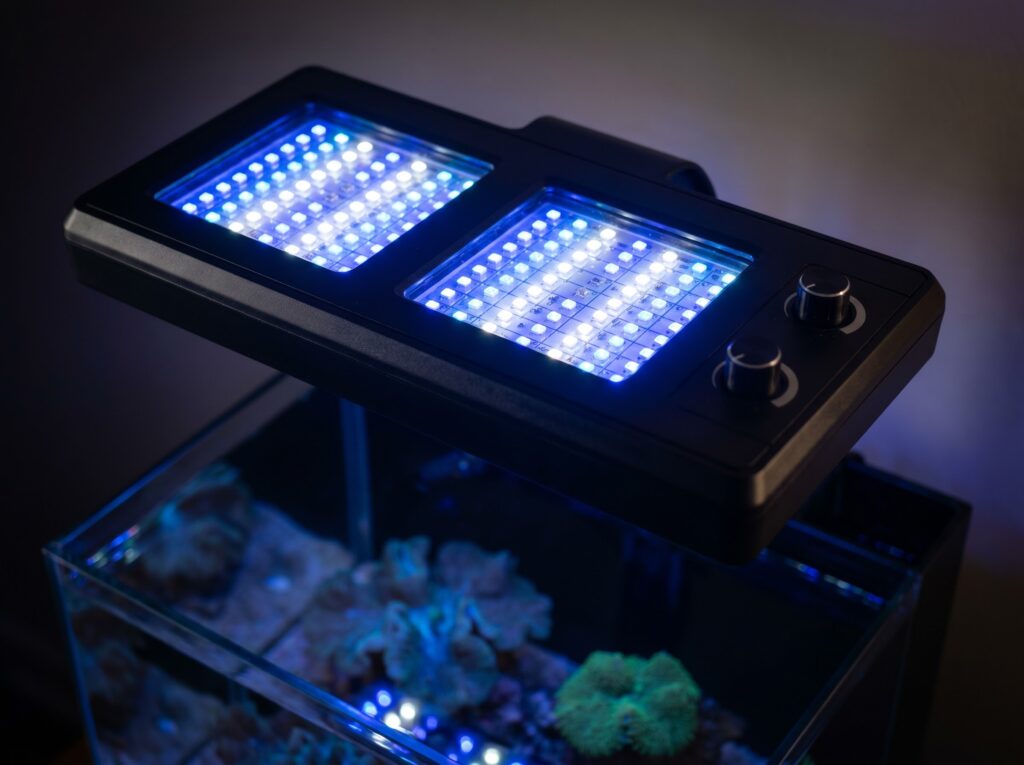
Black-box LEDs are the flat rectangular fixtures made in China by brands like MarsAqua, VIPARSPECTRA, and similar companies. A single 165W unit runs roughly $75-130. For that money, you get a working reef light - and that is genuinely true. Reefers have grown healthy softies and LPS under these lights for years.
What you give up matters, though. Most black-box fixtures have only two control channels (a blue channel and a white channel), no per-color-channel adjustment, and no app. The dimmer knobs are analog. You cannot replicate a sunrise/sunset ramp, run a lunar cycle, or integrate with an aquarium controller. The PAR claims on the box are routinely inflated - a unit labeled "165W" typically draws closer to 100-110W from the wall. Spread is often uneven, with a hot center and dim edges that make consistent coral placement across a 24-inch footprint difficult.
The VIPARSPECTRA V165 is a representative example. It covers a 24"×24" footprint at 12 inches of mounting height and reaches a reported 325 µmol/m²/s at 24 inches of depth, which is sufficient for softies and LPS placed in the upper half of a standard 18-inch-tall tank. For a budget soft-coral display or a beginner learning the hobby, that is a reasonable starting point.
Budget lights are also where LED diode quality varies most. Cheaper diodes shift spectrum and lose output over 12-18 months faster than name-brand fixtures. You may save $300 at purchase and replace the light in two years, where a mid-range fixture runs five or more years without meaningful degradation.
Use a budget black-box if: you have a tank under 20 gallons with soft corals only, you are testing the hobby before committing, or you need a secondary light for a refugium. Skip it if you plan to keep SPS, run a display system for more than a year or two, or want any meaningful programmability.
Mid-range LEDs: where most reefers should start
The mid-range bracket - roughly $250-$550 per fixture - covers lights that handle the full spectrum from soft corals through moderately demanding LPS, with some capable of pushing into entry-level SPS. The step up from a black box buys you per-channel color control, proper app integration, better optics, and substantially more even spread.
Three fixtures stand out in this tier:
AI Prime 16HD ($265) - best for nano tanks
The AquaIllumination Prime 16HD draws 59W from the wall at full power and delivers a peak of 100 µmol/m²/s at 24 inches of depth across a 24"×24" spread. Eight separate color channels (royal blue, blue, cool white, violet, UV, red, green, moonlight) are controlled through the free Mobius app with full sunrise/sunset programming. At 4.88 inches square and under a pound, it mounts on a flex arm or directly to most all-in-one tanks. For a 10-20 gallon mixed-reef with softies and LPS, it is hard to beat at this price. We go deeper on nano-specific options in our guide to the best light for a nano reef tank.
AI Hydra 32 HD ($450) - best for standard 40-75 gallon tanks
The Hydra 32 HD is the natural step up: 90W, 32 LEDs across seven color channels plus a dedicated moonlight, and a 7.28" x 5.375" rectangular body that produces even spread across a 24-30 inch tank. The TIR lenses shape output for PAR efficiency rather than raw lumens. AquaIllumination does not publish a PAR map for the Hydra 32 HD (that is a frustrating manufacturer omission), but the optics and diode count place it comfortably in the 200-300 µmol/m²/s range mid-tank on a standard 24-inch-deep aquarium at a reasonable mounting height. It integrates with Neptune Apex controllers and the full Mobius ecosystem. At $450, it covers a 40-50 gallon display system well, and two units handle a 75-gallon or 4-foot tank.
Red Sea ReefLED 90 (~$389) - best for Red Sea tank owners and clean aesthetics
Red Sea designed the ReefLED 90 specifically for their Reefer and MAX series tanks, and the integration shows. Mounted at 20-25 cm above the water, the fixture produces 250-300 µmol/m²/s at center and 120-160 µmol/m²/s at the edges. Control is through the ReefBeat app (iOS/Android), which bundles pre-set reef programs, sunrise/sunset, lunar cycling, and cloud-effect simulation. The ReefBeat ecosystem also ties into Red Sea dosers and the Red Sea wave pumps for a genuinely integrated control experience. If you are not running Red Sea hardware, the Hydra 32 HD offers similar PAR and broader controller compatibility at a similar price.
For a full breakdown of how to set and tune your photoperiod - ramp duration, peak hours, blue-to-white ratios by coral type - see our lighting overview.
Premium LEDs: when the upgrade is worth it
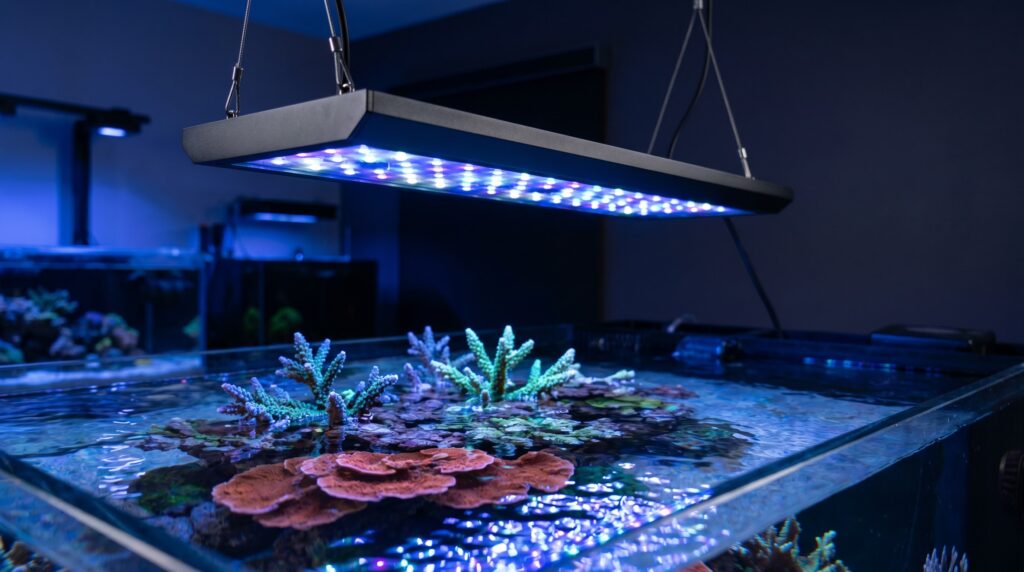
Above $600 per fixture, you are paying for four things: peak PAR output that can supply demanding SPS at depth, the widest and most even spread so a single fixture covers a larger footprint, build quality and diode longevity measured in years rather than months, and the deepest programmability available in aquarium lighting.
EcoTech Marine Radion XR30 G6 Pro ($1,200) - the reference standard
The XR30 G6 Pro pulls 215W and uses EcoTech's HEI2 optical system to deliver 126.3 degrees of spread - the widest available from a single compact reef pendant. EcoTech specifies even PAR across nearly 4 feet of coverage area, making this fixture able to light a 48"×30" footprint with a single unit. That PAR at depth is high enough to sustain Acropora in the upper column of a 24-inch-deep tank. The LED array includes 100 diodes across 11 spectral bands (including 395nm UV for fluorescence). Control is through EcoTech's Mobius app with cloud backup, and the fixture integrates with the full ReefLink/VorTech ecosystem. For a serious SPS system or a large display tank, the XR30 G6 Pro is the benchmark most other premium fixtures are measured against.
The XR15 G6 Pro (95W, $700 approximate) covers the same output quality in a smaller form factor suited to tanks up to roughly 30"×24".
Kessil A360XE (~$499) - the point-source option
Kessil takes a different design philosophy. Where the Radion uses dozens of individual diodes, Kessil packs dense arrays into a tiny 4.3-inch puck - what they call the "densest LED array in the world" - to approximate the point-source character of metal halide lighting. A single A360XE (90W) covers 24"×24" for a mixed reef or 20"×20" for SPS. The tight, directional beam produces natural shimmer lines across coral tissue that flat-panel arrays cannot replicate. K-Link allows multi-unit grouping and control via the Kessil WiFi dongle. The A360XE is 15% brighter than the previous A360X at the same 90W draw. One common criticism: the Kessil app ecosystem is less polished than EcoTech's Mobius or the AI/Hydra tools, though the hardware is excellent. At $499, the A360XE is worth serious consideration if shimmer and natural aesthetics matter as much to you as raw PAR output.
Spec comparison table: match the fixture to your tank
The table below is a reference guide. "Coverage" figures reflect manufacturer-stated or independently measured mixed-reef footprints at a standard 8-12 inch mounting height. PAR at depth is mid-tank (roughly 12 inches below surface) unless noted. Prices are approximate retail as of 2025 and vary by retailer.
| Fixture | Tier | Wall draw | PAR mid-tank (est.) | Coverage (mixed reef) | Color channels | App control | Price (USD) | Best for |
|---|---|---|---|---|---|---|---|---|
| MarsAqua / VIPARSPECTRA 165W | Budget | ~100-110W | ~150-200 µmol/m²/s | 24"×24" | 2 (blue, white) | None (analog dimmers) | $75-130 | Softies, LPS; beginner / test tank |
| AI Prime 16HD | Mid-range | 59W | ~100 µmol/m²/s at 24" | 24"×24" | 8 | Mobius (BLE/WiFi) | $265 | Nano (10-20 gal), softies + LPS |
| Red Sea ReefLED 90 | Mid-range | 90W | ~200-250 µmol/m²/s | 24"×24" | 4 + moonlight | ReefBeat (WiFi) | ~$389 | Red Sea tanks; softies, LPS, easy SPS |
| AI Hydra 32 HD | Mid-range | 90W | ~200-300 µmol/m²/s (est.) | 24-30"×24" | 7 + moonlight | Mobius (BLE/WiFi) | $450 | 40-75 gal mixed reef, LPS + moderate SPS |
| Kessil A360XE | Premium | 90W | High (point-source; shimmer effect) | 24"×24" (mixed) / 20"×20" (SPS) | Tunable (dense array) | K-Link / WiFi dongle | ~$499 | Shimmer character; LPS, moderate SPS |
| EcoTech Radion XR30 G6 Pro | Premium | 215W | Very high (>350 µmol/m²/s at 24" depth) | 48"×30" | 11 spectral bands | Mobius (WiFi) | $1,200 | Large tanks, demanding SPS, long-term build |
A few notes on reading this table. The mid-tank PAR column assumes a standard 18-24 inch deep aquarium with the fixture at the manufacturer's recommended height. A shallower tank or higher mount will produce significantly more PAR at the substrate. The Kessil A360XE's point-source design produces a very different PAR gradient than a flat-panel - hot directly below the fixture, lower at the edges - which matters for coral placement. The Radion's wide 126.3-degree spread means PAR is unusually even across its entire footprint.
For a nano-specific comparison - pico and small all-in-one tanks under 15 gallons - the PAR geometry changes significantly. See the dedicated comparison in our article on the best light for a nano reef tank.
How to choose: the three questions that decide the tier
Before picking a fixture, answer these three questions:
What corals do you actually plan to keep? Softies and easy LPS (Hammers, Torches) do not need premium light. Mid-range is plenty. If Acropora or other demanding SPS are the goal, plan for a premium fixture from the start - retrofitting later costs more than buying right the first time.
How big is your tank footprint? A 20-gallon nano does not need a $1,200 fixture. A 75-gallon display with SPS probably needs two mid-range lights or one premium unit. The coverage column in the table above is the key reference. When a single fixture's stated coverage is smaller than your footprint, light spread at the edges of the tank will drop below 50 µmol/m²/s - which is below what most corals tolerate long-term.
How long are you in this hobby? If you are genuinely unsure whether reef-keeping will stick, a $100 black-box light lets you run a soft-coral tank for a year or two without major financial risk. If you are already sure this is a long-term system, the mid-to-premium investment pays back in stability, longevity, and the ability to keep a wider range of corals without re-buying hardware.
One cost that almost no one calculates at purchase: electricity. A 215W Radion running 10 hours a day adds roughly $85/year at US average electricity rates ($0.11/kWh). A 59W AI Prime adds about $24/year. Over five years, the operational cost gap between the smallest and largest fixtures is around $300 - less dramatic than the purchase price gap, but worth knowing.
Frequently asked questions
Can I grow SPS corals under a mid-range LED?
Yes, with placement. Entry-level SPS like Montipora and Stylophora can thrive in the upper portion of a tank under a well-positioned AI Hydra 32 HD or Red Sea ReefLED 90 where PAR reaches 250-350 µmol/m²/s. Demanding Acropora typically needs a premium fixture or very shallow water to hit the 350-500 µmol/m²/s range these corals prefer.
How high should I mount my LED above the water?
Most flat-panel fixtures are designed for 6-12 inches above the water surface. Mounting higher spreads the footprint but drops peak PAR. Kessil's puck-style units are often mounted 12-18 inches above water to widen the spread. Always check the manufacturer's mounting-height recommendation alongside their PAR map, since the two numbers are linked.
Do I need to measure PAR with a meter?
Not necessarily, but it removes guesswork. If you are placing demanding SPS or troubleshooting bleaching and browning, a PAR meter reading at the coral's location is far more reliable than manufacturer charts. Rental programs are available through some aquarium shops. If you are running softies and easy LPS, manufacturer specs plus visual coral response are generally sufficient.
Will a black-box LED damage my corals?
It can - but the more common failure mode is too little light, not too much. When a coral does not receive enough light, it packs in more zooxanthellae to capture what little it can get - this is what "browning down" looks like, and it means your coral is stressed, not healthy. Bleaching is the opposite: too much light (or heat) drives the coral to expel its zooxanthellae, leaving tissue pale or white. A black-box LED can cause bleaching at very close mounting distances, especially under the hot center of the spread. Starting with the fixture mounted high and corals placed low, then adjusting gradually, is the safest approach regardless of fixture tier.