The best fish for a 20-gallon reef tank: a practical stocking guide
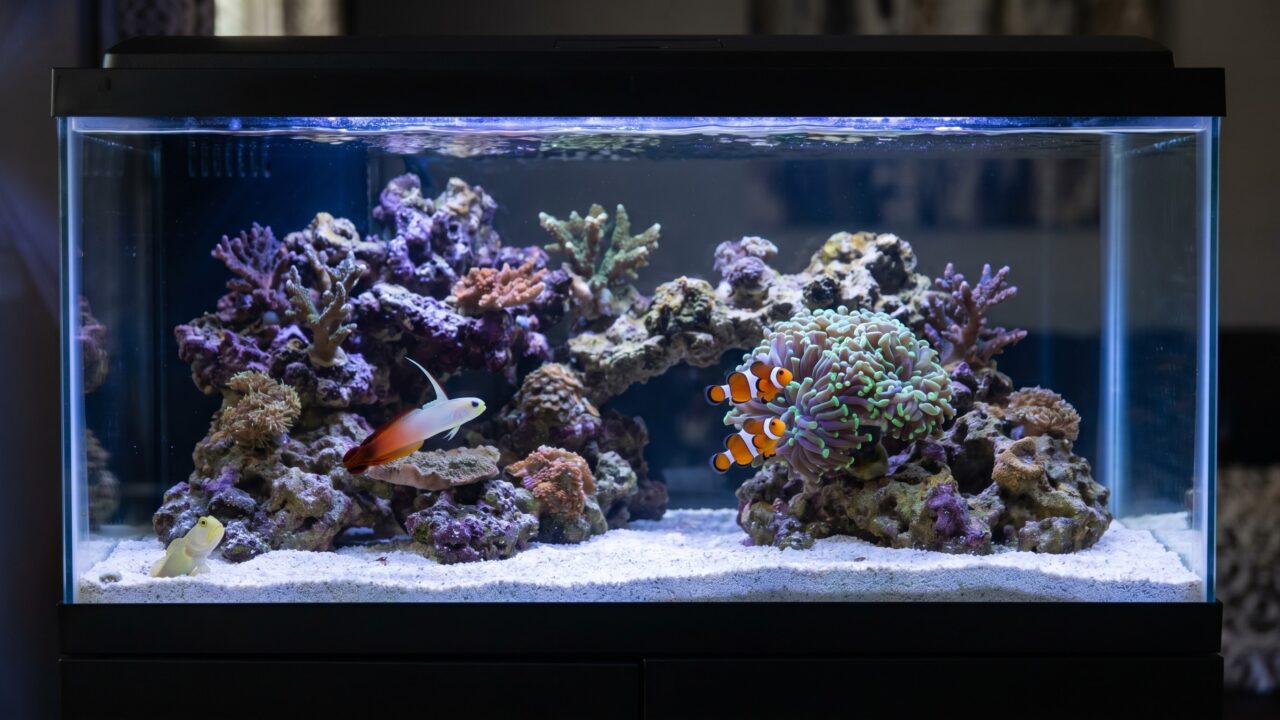
Twenty gallons is genuinely enough for a beautiful, thriving reef, but only if you stock it honestly. The fish that work here are small, relatively low-bioload species that spend their lives within a compact territory. The number that actually fits, given a healthy filter, a protein skimmer, and regular water changes, is roughly four to six fish total. Push past that and water quality degrades faster than you can correct it.
The picks below are not a wish list. Each one was chosen because its adult size, territory size, and temperament are a genuine match for 20 gallons, and because a captive-bred specimen is reliably available, which matters for hardiness and disease resistance. If you want to understand why the bioload math works the way it does for reef tanks specifically, the full breakdown is in our guide on how many fish fit in a reef tank.
The species that actually fit
These are the fish most experienced reefers reach for when stocking a small reef. They are not the only choices, but they offer the most forgiving combination of size, temperament, and availability at this tank size.
Ocellaris clownfish (pair)
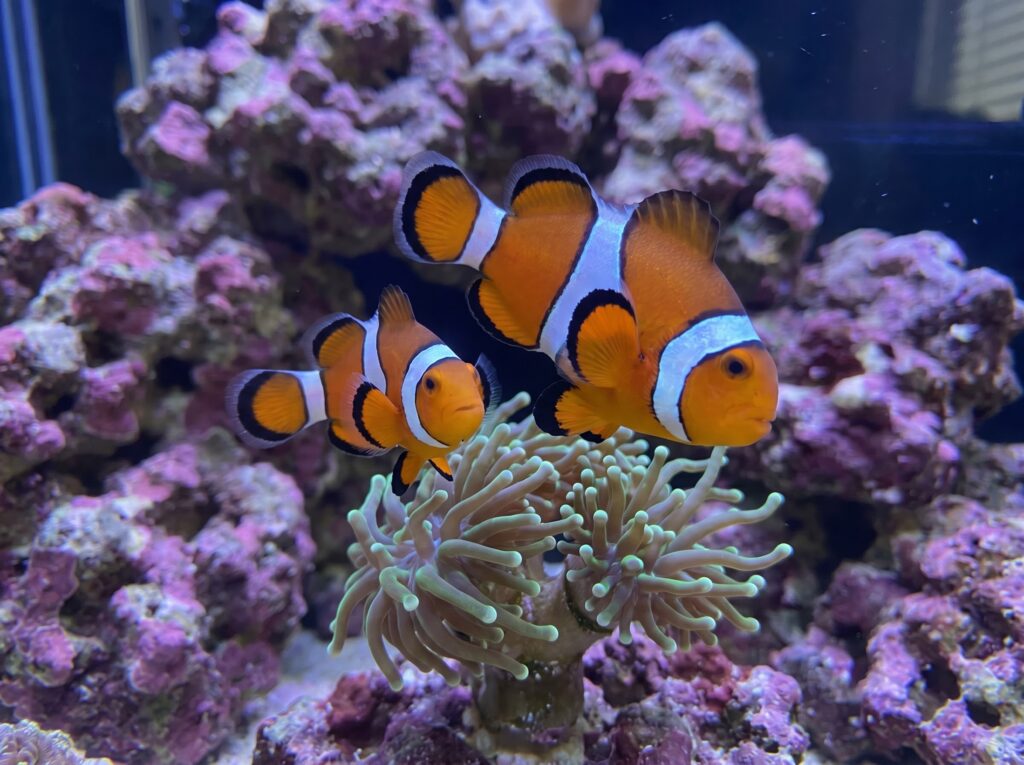
Amphiprion ocellaris tops nearly every small-reef list for a reason. Captive-bred pairs stay within a home territory (usually a coral head or a corner of the rockwork) and rarely bother anything else in the tank. FishBase records the maximum length at 11 cm (~4.3 in), though most aquarium specimens reach 2.5-3 in. Coralife's species guide describes them as "colorful, peaceful and have loads of personality," and that description holds in a small tank: curious, out in the open, eager feeders. Captive-bred fish do not need an anemone, and many never recognize one.
One important note: two pairs will fight. Two clownfish from different species will fight. One bonded pair per tank is the rule, full stop.
Firefish goby
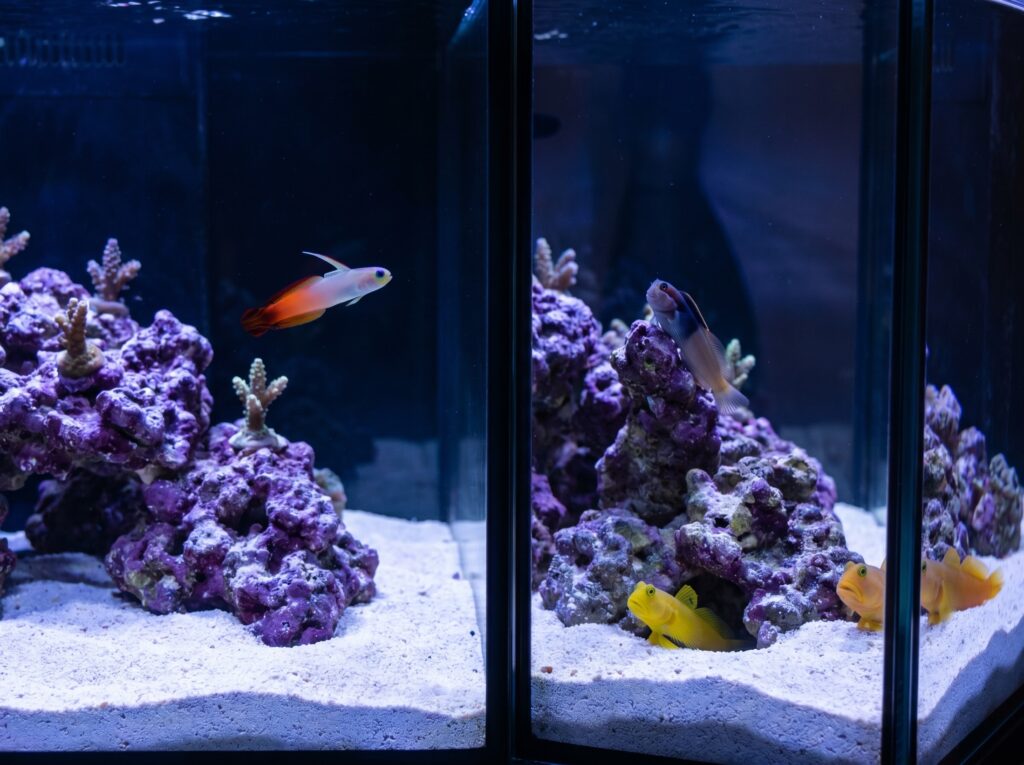
The firefish (Nemateleotris magnifica) reaches 9 cm (about 3.5 in) at maximum, per FishBase, but most captive specimens stay around 3 in. Their natural behavior (hovering just above the substrate facing the current, snapping at zooplankton) translates well to a tank with a wavemaker. FishBase notes they "flick their pennant-like first dorsal fin back and forth as a habit," which is one of the more entertaining things a reef fish does in plain sight.
Two cautions. First, firefish are accomplished jumpers; Coralife's care guide calls a secure lid "mandatory." Second, they turn shy or stop eating entirely when housed with aggressive tank mates. Damsels and pseudochromis (dottybacks) should be on your do-not-add list for this tank. One firefish per 20-gallon system is the practical limit; a bonded pair is possible but less predictable in a small space.
Neon goby
Elacatinus oceanops reaches just 5 cm (2 in) at maximum, making it one of the smallest fish on this list and one of the most useful. FishBase records that these fish "remove ectoparasites on skin and fins, in the mouth and in the gill chambers of greater fish." In a display tank, that cleaning behavior continues, and other fish will present themselves at an impromptu cleaning station. ORA (Oceans, Reefs & Aquariums), a major marine ornamental aquaculture producer, describes the neon goby as "not bothered by larger fish because they are recognized as cleaners," so they hold their own despite their size.
Captive-bred neon gobies are widely available, eat prepared foods readily, and add almost nothing to the bioload. Two can be kept together if introduced simultaneously.
Bicolor blenny
The bicolor blenny (Ecsenius bicolor) maxes out at about 11 cm (4.3 in) per FishBase, though 3-4 in is the typical aquarium size. FishBase describes its habitat as "clear lagoon and seaward reefs with mixed corals and algae-covered rocks," exactly the kind of environment a well-aquascaped 20-gallon provides. Blennies perch on rockwork, graze algae between meals, and have enough personality to hold attention for years.
One practical flag: bicolor blennies may nip at large-polyp stony corals or clam mantles if underfed. Keep a varied diet (mysis, spirulina flakes, pellets) and this is rarely a problem. One per tank; they will fight with other blennies.
Banggai cardinalfish
The Banggai cardinal (Pterapogon kauderni) reaches up to 8.6 cm TL per FishBase, and the Georgia Aquarium describes it as reaching "up to 3 inches." They are slow-moving, cave-oriented fish that spend most of their time hovering near a coral head or piece of live rock. Low activity equals low bioload. ORA notes they are mouthbrooders: the male holds the fertilized eggs until full development and releases them as juveniles, which makes them one of the few reef fish you can realistically breed in a 20-gallon.
A mated pair works well in a 20. Three or more males in a small space leads to hierarchy stress. Source captive-bred specimens; wild-caught Banggais come from a population listed as Endangered (EN) on FishBase.
Choosing your stock: three complete lists
The table below gives three worked examples for a 20-gallon reef. Each list is built around compatibility, territory overlap, and bioload. Count reflects the fish's approximate contribution toward the four-to-six-fish ceiling, factoring body size and activity level, not just length.
| List | Fish | Adult size | Count | Notes |
|---|---|---|---|---|
| A: Peaceful community | Ocellaris clownfish (pair) | 2.5-3 in | 2 | Introduce as a bonded pair or two juveniles together |
| Firefish goby | ~3 in | 1 | Lid essential; add last | |
| Neon goby (pair) | ~2 in | 2 | Introduce simultaneously; will pair naturally | |
| B: Bold personality | Ocellaris clownfish (pair) | 2.5-3 in | 2 | Choose a captive-bred pair for best temperament |
| Bicolor blenny | 3-4 in | 1 | Feed varied diet to prevent coral nipping | |
| Yellow watchman goby + pistol shrimp | ~3 in | 1 fish + 1 shrimp | Sandy patch needed for burrow; add goby first | |
| C: Cardinalfish focus | Banggai cardinalfish (pair) | ~3 in | 2 | Captive-bred only; source carefully |
| Neon goby (pair) | ~2 in | 2 | Cleaning station behavior is a bonus | |
| Firefish goby | ~3 in | 1 | Lid essential |
A few decisions that shape which list suits you. List A is the most forgiving for a first saltwater tank. All three species are hardy, captive-bred, and widely available. List B is more visually dynamic; the goby-shrimp partnership is one of the best behavioral shows in reef keeping. List C works well if you want to observe spawning behavior, since Banggais can breed in a small tank - a bonded pair in a 20-gallon has produced fry in the hobby, though some keepers prefer 30 gallons for more reliable results.
List B features the yellow watchman goby (Cryptocentrus cinctus) paired with a pistol shrimp. FishBase notes the species "lives in a burrow with alpheid shrimps" in the wild, and the same partnership works in a tank. The goby acts as a lookout while the shrimp excavates and maintains their shared burrow - one of the more entertaining behavioral displays in reef keeping. FishBase records the maximum length at 10 cm SL, but most aquarium specimens stay around 3 in.
Want to understand how these species compare for new reefers more broadly? Our guide to beginner-friendly reef-safe fish covers compatibility notes and sourcing tips across a wider range of species.
What the store recommends and why it does not fit
Two fish come up constantly in reef store conversations about 20-gallon tanks. Neither belongs there.
Tangs
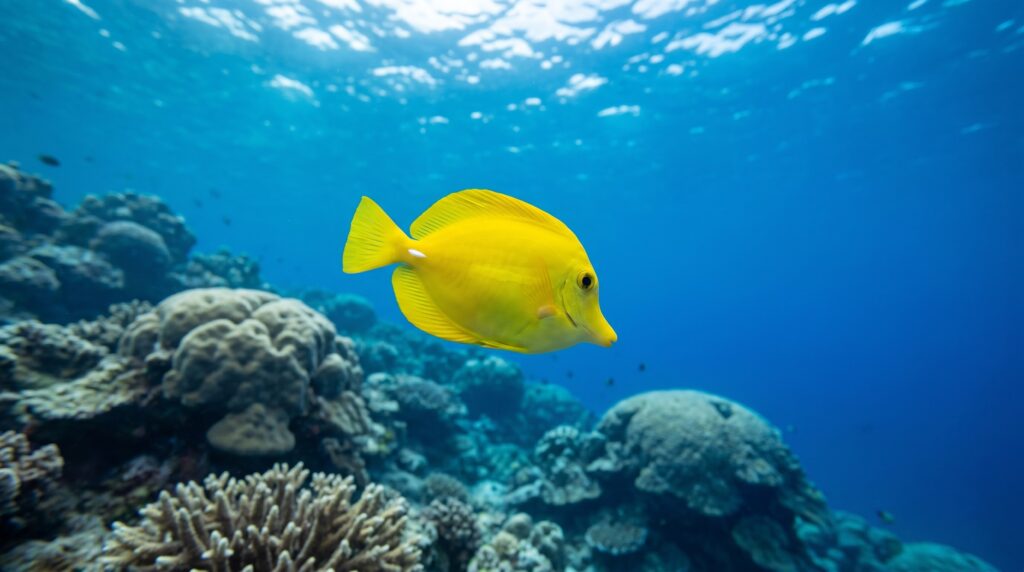
The yellow tang (Zebrasoma flavescens) is beautiful and genuinely reef safe. FishBase records it as "mainly herbivorous, browsing on filamentous algae" and gives a maximum length of 20 cm (8 in). That length matters. In the wild, surgeonfish patrol large territories to graze; they are fast, open-water swimmers. An 8-inch fish in a 20-gallon tank cannot express that behavior, and the chronic stress that results shows up as faded color, reduced immunity, and shortened lifespan.
The minimum honest tank size for a single yellow tang is generally quoted at 75-100 gallons by experienced marine aquarists. A 20-gallon is not a stepping stone to getting a tang "later." It is simply the wrong environment for the animal at any point in its life.
Anthias
Anthias (Pseudanthias squamipinnis and relatives) look manageable in a store tank. The females stay around 7 cm (FishBase), and the colors are extraordinary. The problem is feeding demand. In the wild they form large aggregations above coral outcrops, picking zooplankton out of the current almost continuously. Tropical Fish Hobbyist Magazine's species profile is blunt: they "fail rapidly when not properly fed" and need "a large aquarium, preferably 70 gallons or better." In a small tank with two or three feedings a day, they decline: slowly at first, then suddenly.
Anthias also carry a social complexity that amplifies the problem. Males are territorial and haremic (FishBase), and in a group of all females, one will eventually change sex. Managing that transition in a cramped system is difficult even for experienced keepers.
If a store employee suggests either species for a 20-gallon, treat it as a signal to ask more questions before buying anything that day.
Stocking order and introduction tips
The sequence in which fish go in matters almost as much as the selection itself. In a 20-gallon, there is little margin to correct a territorial dispute after the fact.
- Clownfish pair first, or simultaneously with the goby. They establish their territory quickly but confine it to a small area once they settle.
- Gobies and blennies next. They claim separate microhabitats (the blenny on rockwork, the watchman at the sand surface), so overlap is minimal if the tank has adequate structure.
- Firefish last. They are the most easily spooked and do best when they can settle without competition for hiding spots.
- Quarantine every fish before adding it to the display. Ich travels on new arrivals, and a 20-gallon reef has no room for a copper-based treatment; you would have to remove every fish and invertebrate to treat safely. Our article on treating ich in a reef tank covers this in full.
- Wait at least two to four weeks between additions. The biological filter in a small tank takes time to adjust to each new bioload increment.
For the full picture on building a 20-gallon reef from the ground up, including equipment, cycling, and aquascaping decisions that affect stocking choices, see our 20-gallon reef tank build guide.
A quick word on the royal gramma
Gramma loreto is a popular alternative to the firefish: similar size (~3 in), vivid color, and generally considered reef safe. Coralife's care guide lists a minimum tank size of 30 gallons. Some experienced reefers keep one in a 20-gallon successfully. The caution is territorial aggression: they "will fiercely defend their territory against members of their own species," and in a 20-gallon that assertiveness can bleed into harassment of peaceful tank mates like firefish. If you want a gramma in a 20, it works best as the only mid-water fish, paired with bottom-dwelling gobies rather than other open-water species.
Frequently asked questions
Can I keep a dottyback in a 20-gallon reef?
Dottybacks are small and colorful, but most species carry a reputation for aggressive territory defense disproportionate to their size. In a 20-gallon with peaceful fish like firefish or neon gobies, a dottyback will almost certainly bully them. The orchid dottyback (Pseudochromis fridmani) is the mildest option, but even then, 20 gallons leaves little room for conflict resolution. Reserve dottybacks for larger tanks with more assertive tank mates.
Do I need an anemone for my clownfish?
No. Captive-bred ocellaris clownfish are raised without anemones and often ignore them entirely when offered one. In a 20-gallon, hosting an anemone adds significant husbandry demands - they need intense lighting, stable water chemistry, and room to wander - and the trade-off is rarely worth it at this tank size. Your clownfish will host in a hammer coral, a toadstool leather, or simply a corner of the rockwork without any stress.
How many fish can I add to a 20-gallon reef?
Four to six small fish is the practical ceiling for a 20-gallon with a good skimmer and regular 10-15% weekly water changes. This assumes fish under 4 inches at adult size and low-to-moderate activity levels. The exact number depends on your filtration, feeding habits, and how carefully you monitor nitrates and phosphates. Stay in the lower half of that range while the tank is new.
Is a yellow tang ever okay in a 20-gallon?
No, including as a "temporary" fish while you build a bigger system. Yellow tangs grow to 8 inches and need open swimming room to stay healthy. Chronic confinement causes stress that suppresses immunity and accelerates disease. If your plan is to upgrade tanks in six months, that is six months of substandard conditions for the fish. Buy the tang when the larger tank is running.