The best clean-up crew for a reef tank, matched to tank size
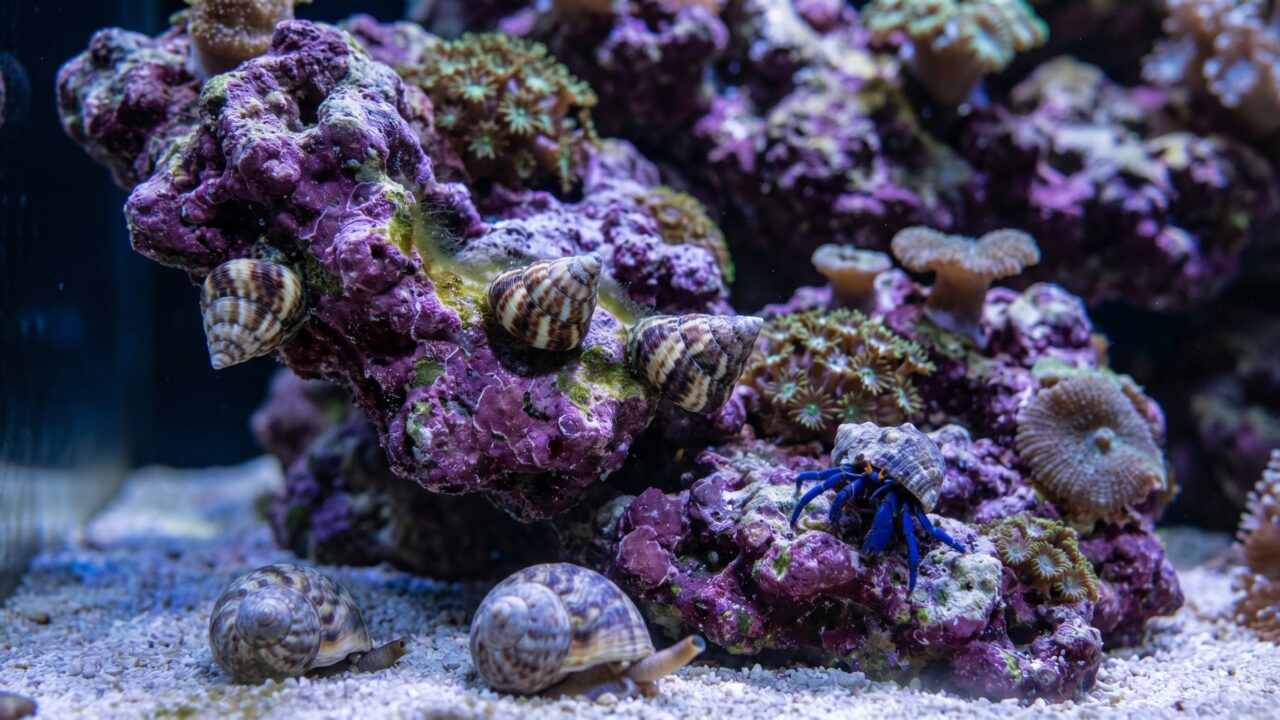
Most reef keepers lose their first clean-up crew to starvation, not disease. A hundred snails in a 30-gallon tank sounds impressive for about two weeks, then the food runs out and they drop one by one, each decomposing body spiking the nutrients you were trying to control. A better approach: stock fewer animals than the tank can comfortably feed, confirm they are thriving, then add more as the bioload grows.
This guide gives you concrete species lists and counts for four common tank sizes - 10, 20, 40, and 75 gallons - built around what each animal actually eats, not around what fills a vendor bundle. The numbers assume a tank that has finished cycling and has fish in it. "Finished cycling" means ammonia and nitrite have peaked and dropped to zero, and nitrate has appeared - not just a few weeks of running water. A brand-new tank with an active diatom bloom has plenty for a small starter crew; a tank with no visible algae has almost nothing.
What a clean-up crew actually does (and what it cannot do)
A clean-up crew is not a substitute for good husbandry. Snails, hermit crabs, and shrimp remove algae, detritus, and leftover food faster than passive filtration can, which keeps nutrients from spiking between water changes. They do not eliminate the need for water changes, protein skimming, or good flow. Think of them as the last line of housekeeping, not the first.
Each species occupies a different feeding zone. Grazing snails work the rock and glass surfaces. Sand-sifters and detritivores work the substrate. Hermit crabs patrol everywhere and are opportunistic. A useful crew covers all three zones, because algae and waste accumulate in all of them.
For a broader overview of the invertebrate options available, the clean-up crew guide covers the full species roster. This article focuses on sizing: how many of each animal, for which tank.
Why pre-packaged CUC bundles often oversell quantity
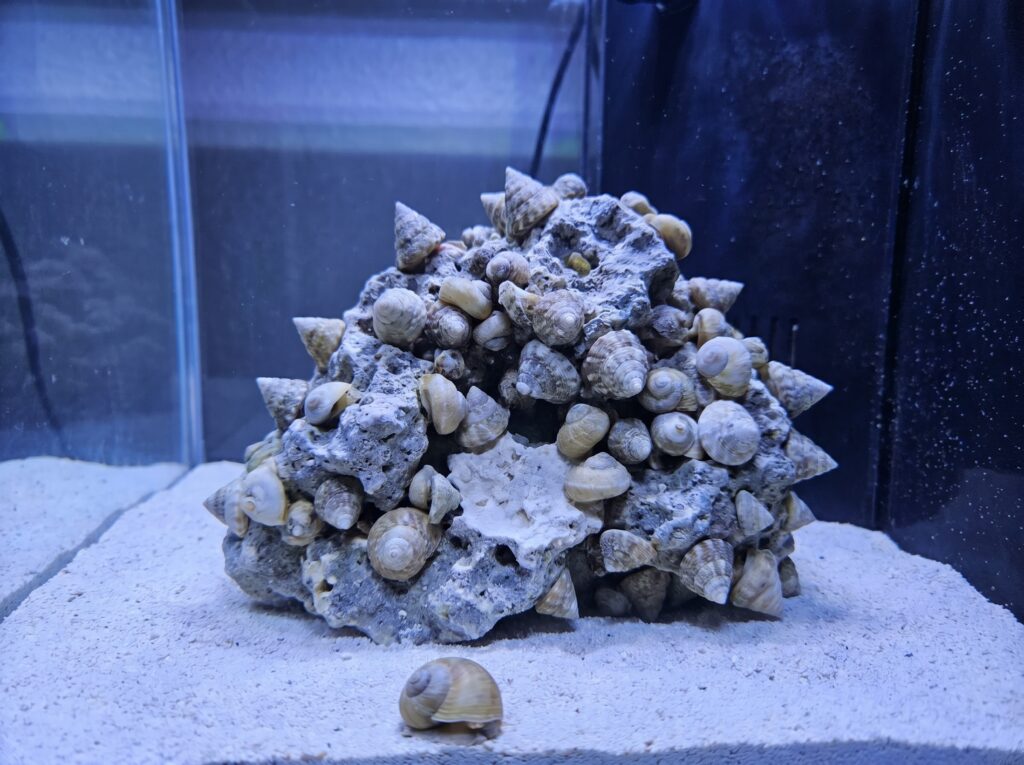
Vendors selling 50- or 100-piece "reef packs" are optimizing for a sale, not for your bioload. The standard pitch is one snail per gallon or more - a ratio that only works if your tank has mature, heavy algae growth. Most beginner tanks do not. The result is predictable: the excess animals consume the available food quickly, then begin dying. Each corpse releases ammonia. Ammonia feeds more algae. The algae bloom then gets blamed on the water, not on the dead snails rotting in the sand.
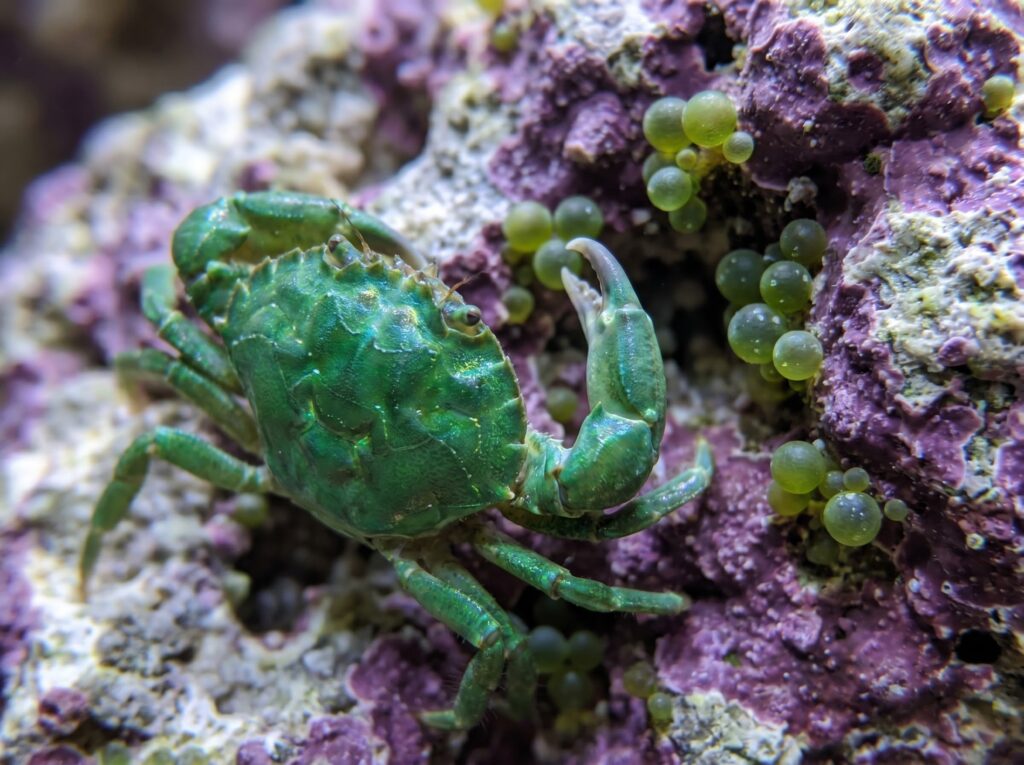
A peer-reviewed study on emerald crabs illustrates this neatly: when pellets were available, the crabs chose pellets over bubble algae 77% of the time. A crab that is eating pellet food is not controlling bubble algae - it is adding to your bioload. Supplemental feeding is sometimes necessary to keep animals alive when algae is scarce, but it reduces the algae-control value you paid for.
Start smaller than you think you need. A 20-gallon tank with five snails that are visibly grazing on every surface is better managed than the same tank with 25 snails where half are starving.
CUC packages by tank size
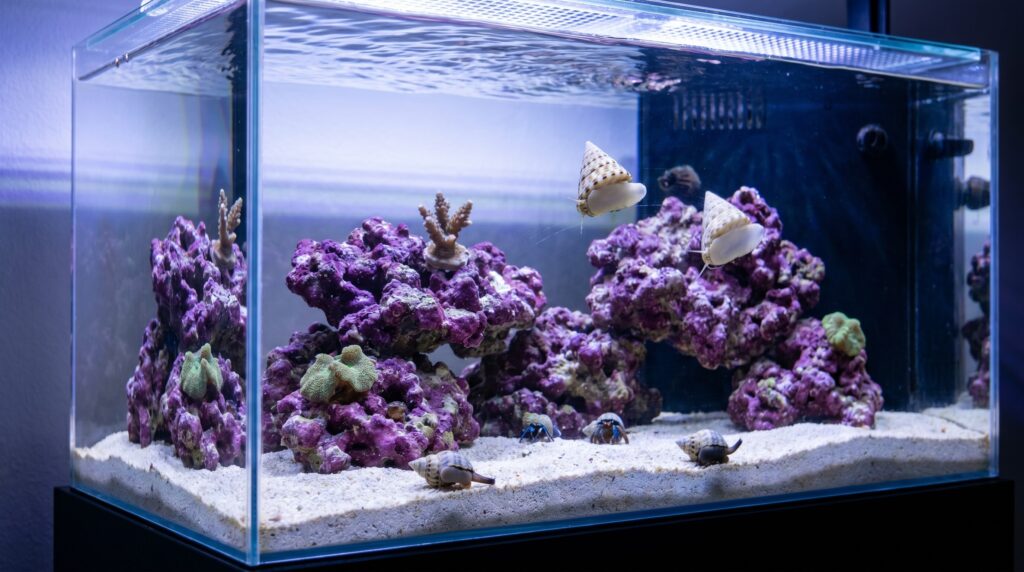
The tables below are starting points for a tank with fish and a moderate bioload. Scale up if you see persistent film algae on the glass between weekly cleanings; scale down if you find dead snails regularly. Quantities given are for an established tank (at least three months old). A brand-new tank should start at roughly half these numbers.
For guidance on snail density specifically, the how many snails per gallon article breaks down the math by species and algae load.
10-gallon nano reef
| Species | Count | Zone | Primary job | Notes |
|---|---|---|---|---|
| Trochus or Astrea snail | 3 | Rock and glass | Film algae, diatoms, cyanobacteria | Trochus can right itself if flipped; Astrea cannot - check it regularly |
| Cerith snail | 3 | Sand bed | Detritus, algae, fish waste | Needs at least 1 inch of sand; nocturnal |
| Nassarius snail | 2 | Sand bed | Detritus, uneaten food | Stays buried; siphon tip visible at surface |
| Blue-legged hermit crab | 2 | All zones | Hair algae, detritus, scavenging | Provide 4-5 empty shells or they will evict your snails |
Total: 10 animals. This is a light crew for a 10-gallon. Add a third or fourth cerith if the sand bed looks dirty after a week, but do not add more grazers until the existing ones are clearly finding food.
20-gallon reef
| Species | Count | Zone | Primary job | Notes |
|---|---|---|---|---|
| Trochus snail | 5 | Rock and glass | Film algae, diatoms, hair algae | Hardy; can right itself; good night grazer |
| Cerith snail | 5 | Sand bed | Detritus, settled waste | Roughly one per 5 gallons is a practical starting ratio |
| Nassarius snail | 3 | Sand bed | Detritus, uneaten food | Dramatically emerges when food hits the water |
| Blue-legged hermit crab | 5 | All zones | Hair algae, detritus, opportunistic scavenging | Provide at least 7-8 empty shells |
| Peppermint shrimp | 1-2 | Rock crevices | Aiptasia (inconsistent); detritus scavenging | Not all individuals eat Aiptasia; keep 2 for better odds |
Total: 19-20 animals. For a 20-gallon all-in-one or peninsula tank, this crew handles a moderate fish load (two or three small fish). A 20-gallon with a refugium and heavy feeding may support slightly more. One without fish is overstocked at these numbers.
40-gallon breeder reef
| Species | Count | Zone | Primary job | Notes |
|---|---|---|---|---|
| Trochus snail | 8 | Rock and glass | Film algae, diatoms, cyanobacteria | Workhorse grazer; leave them alone and they graze reliably |
| Astrea snail | 4 | Rock and glass | Film algae, brown algae | Check weekly for flipped individuals; right them promptly |
| Cerith snail | 8 | Sand bed | Detritus, algae, waste | Nocturnal; count them in the morning to spot losses early |
| Nassarius snail | 5 | Sand bed | Detritus, uneaten food, aeration | Burrowing action oxygenates substrate and prevents anaerobic pockets |
| Scarlet reef hermit crab | 6 | Rock and rubble | Hair algae, filamentous algae, cyanobacteria | More peaceful than blue-legs; smaller body means less coral disturbance |
| Blue-legged hermit crab | 5 | All zones | Hair algae, detritus, opportunistic | Mix with scarlets; provide plenty of shells |
| Emerald crab | 1 | Rock | Bubble algae (Valonia/Ventricaria) | Only add if bubble algae is present; one is enough for a 40-gallon |
| Peppermint shrimp | 2 | Rock crevices | Aiptasia, detritus scavenging | Two increases the chance that at least one hunts Aiptasia |
Total: roughly 39 animals (conditionally, if bubble algae is present). Omit the emerald crab if the tank has no bubble algae - it will simply eat pellets and contribute to the bioload without controlling anything. A 40-gallon breeder with this crew and four to six fish runs well. Watch the hermit population carefully; they will cannibalize each other if shells run scarce.
75-gallon reef
| Species | Count | Zone | Primary job | Notes |
|---|---|---|---|---|
| Trochus snail | 12 | Rock and glass | Film algae, diatoms, green hair algae | Most versatile grazer; backbone of rock maintenance |
| Astrea snail | 8 | Rock and glass | Film algae, brown algae | Supplement Trochus coverage on flat rock faces |
| Cerith snail | 15 | Sand bed | Detritus, algae, substrate stirring | Large sand bed benefits greatly from these; nocturnal workers |
| Nassarius snail | 10 | Sand bed | Detritus, uneaten food, substrate aeration | Match count to feeding frequency; more fish = more nassarius |
| Scarlet reef hermit crab | 10 | Rock and rubble | Filamentous algae, hair algae, cyanobacteria | Active daytime grazers; relatively gentle on neighbors |
| Blue-legged hermit crab | 8 | All zones | Hair algae, detritus | Offer 25+ empty shells across the tank for the combined hermit population |
| Emerald crab | 1-2 | Rock | Bubble algae | Conditional; do not stock if no bubble algae problem; minimize pellet feeding if you want algae control |
| Peppermint shrimp | 3 | Rock crevices | Aiptasia, detritus | Three gives a solid chance of having at least one reliable Aiptasia hunter |
| Tuxedo urchin | 1 | Rock and open substrate | Hair algae, diatoms, film algae | Powerful grazer; can knock frags; secure corals before adding; needs ample algae to stay healthy |
Total: 68-69 animals (conditional). A 75-gallon with eight or more fish and heavy feeding will absorb this crew comfortably. Lighter-stocked tanks should trim the hermit crabs and snails by 25-30%. The tuxedo urchin is a powerful addition once the tank is mature - it will strip rock clean of hair algae - but it needs enough growth to graze on, or it starves. Add it last, after at least six months.
Species notes and the trade-offs worth knowing
Hermit crabs and your snails
Blue-legged hermit crabs (Clibanarius tricolor) are reef-safe and peaceful toward corals, but they are not peaceful toward snails or each other when shells run short. Wikipedia's species account describes their shell-fighting behavior as involving "aggressive physical interactions." The fix is simple: buy two or three spare shells for every hermit in the tank and scatter them in low-flow corners. A hermit with an easy upgrade available will usually take that instead of evicting a snail.
Scarlet reef hermit crabs (Paguristes cadenati) are a gentler choice where snail loss has been a problem. They share the same appetite for hair algae and filamentous growth, and their smaller body size means they are less likely to knock over aquascaping or disturb coral bases. For more detail on reef-safe crab options, the reef-safe crabs article covers the full trade-off between species.
Emerald crabs and bubble algae: what the science says
The peer-reviewed study in the Journal of the Marine Biological Association of the United Kingdom found that when pellets were available, Mithraculus sculptus chose pellets 77% of the time over bubble algae. Medium and large crabs consumed more algae than small ones. The study also noted that algal consumption dropped sharply whenever supplemental food was offered - meaning a crab with access to pellets is unlikely to make a dent in a bubble algae colony.
The practical takeaway is to use emerald crabs only when you have an active bubble algae problem, choose a larger individual, and minimize supplemental pellet feeding while the algae is present. They are not a set-and-forget solution, and hobbyist reports suggest that physically breaking bubble algae cells during removal can release contents that spread the infestation, so handle colonies carefully regardless of whether you use a crab.
Nassarius snails and the sand bed
Nassarius snails spend almost their entire lives under the sand. The only sign of them is a thin siphon tube poking above the surface, sweeping the water for chemical signals from food. When feeding hits, they erupt from the substrate and converge - it is one of the more satisfying sights in a reef tank. LiveAquaria describes a small group clearing "detritus, uneaten food, decaying organics, and fish waste." Their burrowing also oxygenates the substrate, which reduces the anaerobic pockets that produce hydrogen sulfide. They are among the few CUC animals that actively benefit the sand bed rather than just cleaning the rock above it.
Like all invertebrates, they are sensitive to copper-based medications. Never dose copper in a reef tank under any circumstances - it will kill your entire invertebrate population.
How to add your crew without losing half of them
Invertebrates are considerably more sensitive to parameter shifts than fish. LiveAquaria's acclimation guide notes that "most invertebrates and marine plants are more sensitive than fish to changes in specific gravity" and recommends keeping specific gravity between 1.023 and 1.025 during the acclimation process. Drip acclimation is standard for all snails, hermit crabs, and shrimp - set up a drip line at about one to two drips per second and run it long enough to slowly equalize temperature and salinity. The full process should take no longer than one hour.
Add animals in small batches rather than all at once. Dropping 40 animals into a tank simultaneously adds a significant oxygen load and parameter shock risk. Five to ten at a time over several days is safer for both the animals and the system.
Watch for the first two weeks. A snail that is not moving and not attached to any surface within 24 hours of introduction is likely dead or dying. Remove it immediately before it begins decomposing. The same applies to any hermit crab sitting motionless outside its shell.
Scaling up over time
The numbers in the tables above are starting points, not fixed limits. As your tank matures and your fish population grows, so does the available food - and the CUC can grow with it. A good indicator that you have room for more grazers is persistent film algae on the glass that returns within two or three days of wiping. If the glass stays clear for five or six days between cleanings, you probably have enough - or slightly too many - animals already.
Add one species at a time when expanding. This makes it straightforward to identify which animal is doing what job, and to spot any losses before they cascade. A sudden drop in snail count nearly always means either starvation or a parameter spike; both are easier to identify when you are adding animals methodically rather than in bulk.
Frequently asked questions
Can I skip hermit crabs entirely?
Yes, and many reef keepers do. Hermit crabs are the most likely CUC animal to cause secondary problems: shell theft, snail predation, and occasional coral disturbance. If you prefer a crab-free tank, replace their algae-scraping role with more Trochus and Astrea snails, and consider adding a tuxedo urchin in tanks 55 gallons and larger once the tank is well established. You lose some opportunistic scavenging, but a well-fed tank with a protein skimmer tolerates that gap easily.
My snails keep dying. What is wrong?
The most common causes are starvation (too many animals for the available algae), a salinity swing during acclimation, or copper contamination in the water column. Confirm your specific gravity is stable at 1.025 with a refractometer, check that no copper-based product has touched the tank, and count your surviving snails against the food the tank actually produces. If the snails that are alive look thin or inactive, reduce the count and let the algae recover.
How long does it take for a CUC to make a visible difference?
A properly sized crew working an established tank should show visible improvement within one to two weeks. Heavily algae-covered rock in a new tank may take three to four weeks before the crew catches up. If you see no progress after a month, the algae source (excess nutrients, too much light) needs to be addressed directly rather than adding more animals.
Do I need a sand bed to keep CUC invertebrates?
Not for grazing snails or hermit crabs. Trochus, Astrea, and hermit crabs work fine in bare-bottom tanks. Cerith snails and Nassarius snails do require a sand bed - they burrow to feed and to protect themselves, and they will not thrive without at least an inch of substrate. If you run a bare bottom, skip those two species and rely on the surface grazers and hermits instead.