How many snails per gallon in a reef tank (and which kinds do which job)
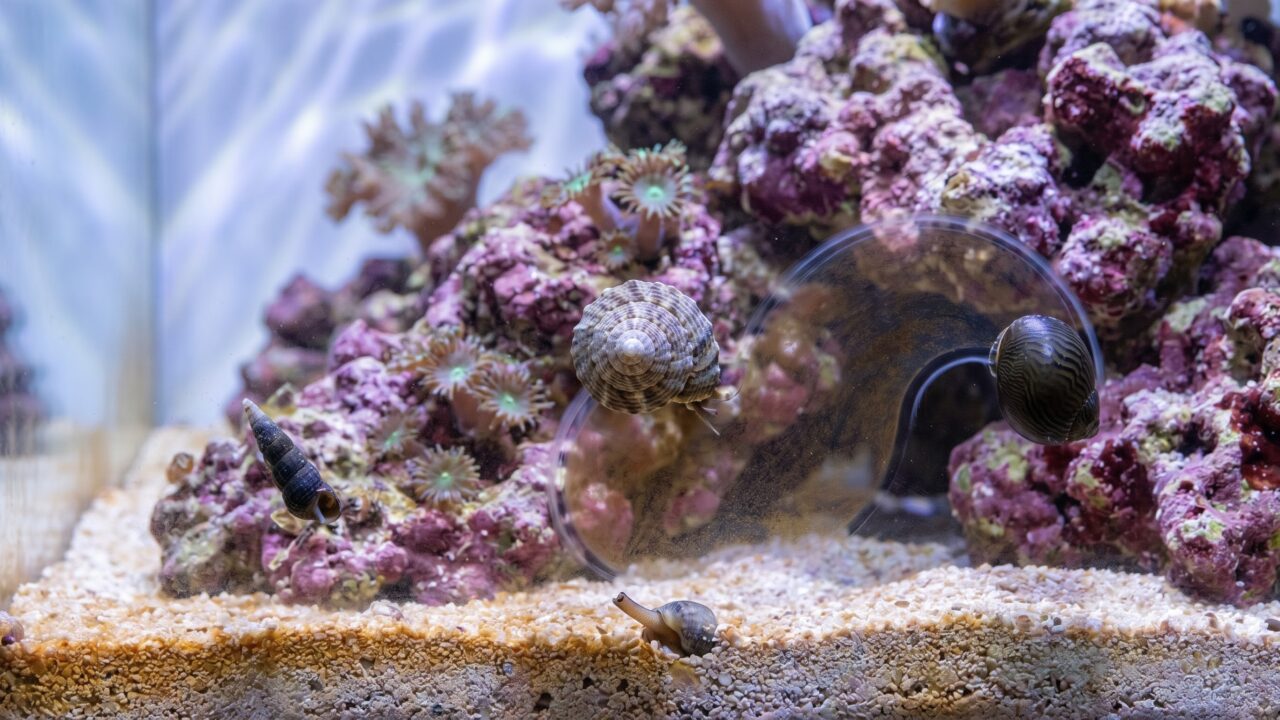
Count the food, not the gallons. That is the principle behind stocking snails in a reef tank, and it is the one thing the popular "one snail per gallon" rule gets badly wrong. A 40-gallon system with very low nutrients and spotless glass cannot sustain 40 snails - they will eat themselves out of a job inside two weeks, starve quietly, then crash your parameters as the bodies decompose. The right number depends on how much algae and detritus your tank actually produces.
With that said, beginners need a starting point. A sensible rough guide for a mixed crew in an established tank is one snail for every two to four gallons of display volume, using several species rather than one. A 20-gallon tank starts with five to eight snails. A 75-gallon supports 18 to 30. You build up from there as algae demand grows, never all at once.
Why the per-gallon rule breaks down
Two tanks of identical size can have wildly different food supplies. A lightly stocked, low-nutrient reef with clean glass and bare rock gives snails almost nothing to eat. A tank with a good sand bed, active fish feeding, and recovering diatom blooms can support far more grazers. The cleanup crew article on this site covers the broader logic; here the focus is the snails specifically.
The University of Florida's IFAS marine aquarium guide puts it plainly: snails "eat what they clean, and if there is nothing to clean, there is nothing to eat." Add your crew after the tank has matured and algae has had time to establish. A brand-new cycled tank with no film yet is the worst time to drop in 30 snails.
Overstocking has a second hazard beyond starvation. A mass die-off releases ammonia fast enough to spike a tank. Snails are small, but enough of them decomposing at once can stress fish and corals noticeably. Start conservative, watch the glass, and add more snails only when you can see that the current crew is keeping up.
The five workhorses and what each one actually does
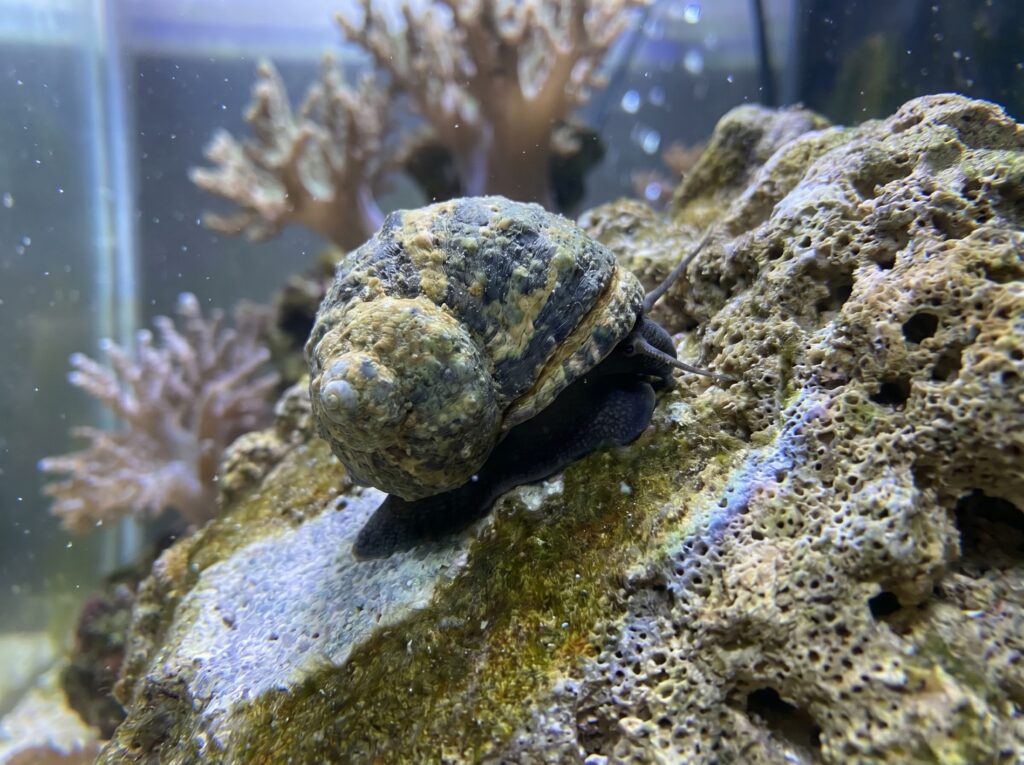
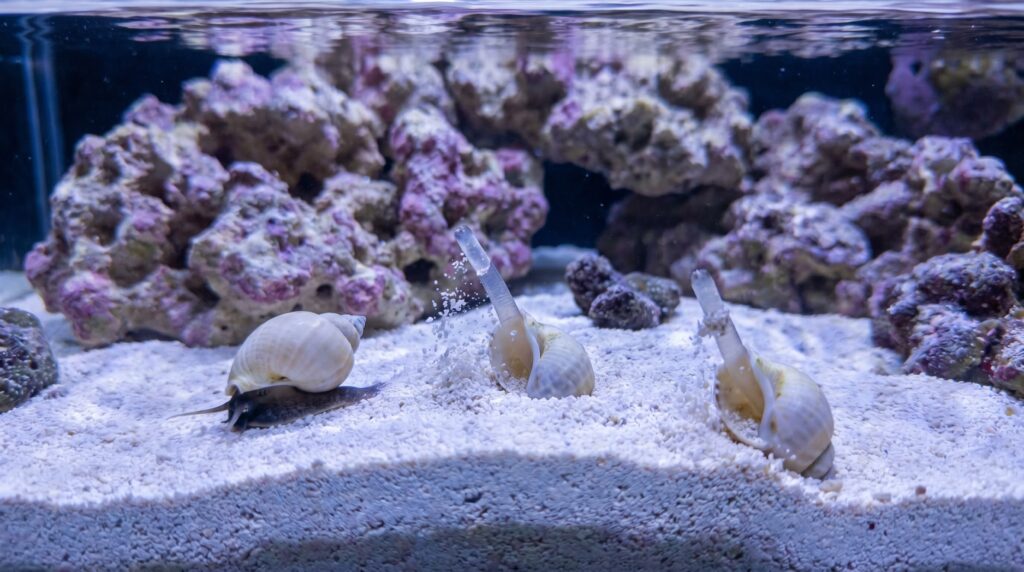
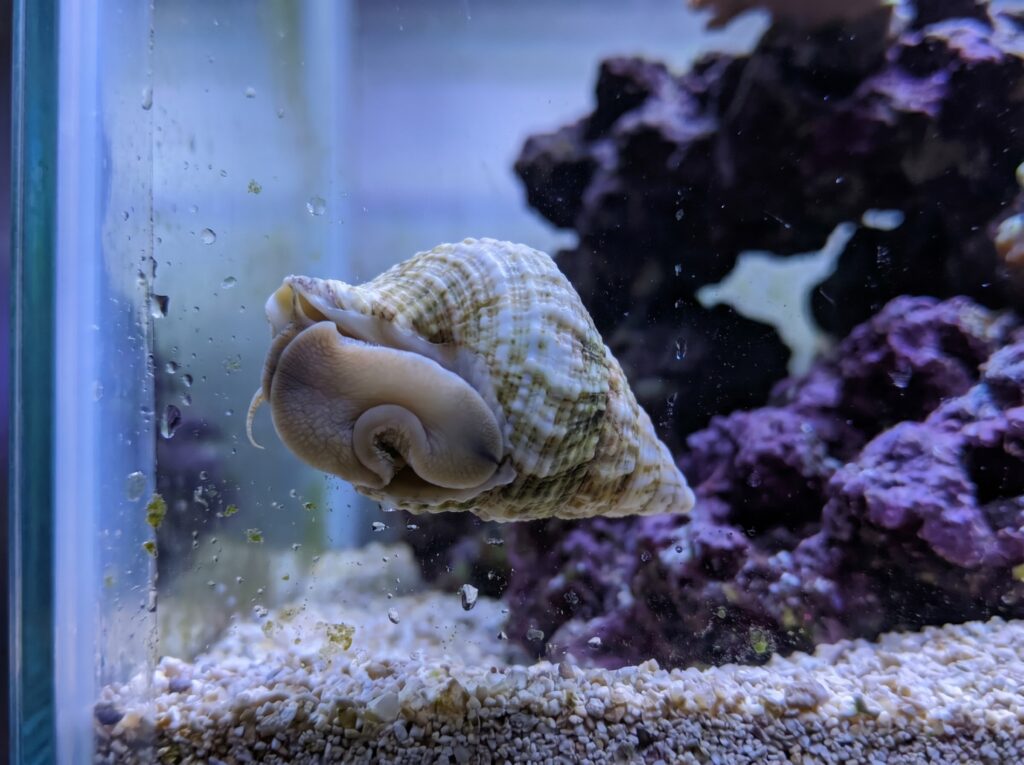
Mixing species matters because different snails target different surfaces and food types. A crew of nothing but turbo snails leaves the sand untouched and misses half the tank. A crew of nothing but nassarius snails does nothing for glass film. Below is a reference table for the five species most beginners will encounter, followed by notes on each.
| Species | Primary job | Secondary job | Surface | Self-rights if flipped? | Starting count (per 20 gal) |
|---|---|---|---|---|---|
| Trochus (Trochus spp.) | Film algae, diatoms, green algae | Cyanobacteria sheets on rock and glass | Glass, rockwork | Yes | 4-6 |
| Turbo / Mexican turbo (Turbo fluctuosus) | Heavy algae growth on rockwork | Thicker macroalgae growth trochus ignores | Rock, back glass | No - needs rescue | 1-2 (large snails) |
| Cerith (Cerithium spp.) | Sand surface algae, film on glass | Aerate substrate; eat cyano in sand | Sand, glass near sand line | Usually | 6-8 |
| Nassarius (Nassarius spp.) | Meaty detritus and decaying organics | Aerate sand bed by burrowing | Under sand | Rarely an issue (small shell) | 3-5 |
| Nerite (Nerita spp.) | Film algae and diatoms on glass | - | Glass, smooth rock faces | Yes (round shell) | 2-3 |
These counts assume moderate nutrient levels and an established tank with visible film algae. Low-nutrient, pristine setups should start at the lower end; tanks recovering from a bloom can go higher.
Trochus: the most useful all-rounder
Trochus snails graze on diatom films, green algae, and - unlike most other snails - cyanobacterial sheets on rockwork and tank panels. They work on glass and rock, they breed in captivity, and they are available in sizes that suit nano tanks and large displays alike. LiveAquaria's care guide recommends one per two to three gallons as a general baseline, which aligns with the starting counts in the table above.
Experienced reef-keepers reach for trochus first for one practical reason: they right themselves when knocked off the glass or blown by a powerhead. A trochus on its back is an inconvenience for about three seconds. A turbo on its back may be a fatality.
Turbo snails: powerful but needy
Mexican turbo snails (Turbo fluctuosus) are the heavy lifters of glass and rock cleaning. They cover surprising ground despite their slow pace, and they tackle hair algae, turf algae, and thicker growth on rockwork that trochus barely dents. Top Shelf Aquatics recommends two to three turbos per 20-30 gallons to prevent competition for algae - far fewer than the trochus count, reflecting how much each individual consumes.
The catch is the flip problem. Like astrea snails, turbos cannot right themselves once knocked upside down, and a turbo left on its back is at risk from hermit crabs or simply starving. Check your turbos daily. If you find one inverted on the sand bed or behind a rock, flip it by hand. Tanks with strong flow or active hermit crabs lose turbos faster. For reef-keepers who prefer a lower-maintenance snail, trochus does 80 percent of the same job without the rescue calls.
Cerith snails: the sand crew
Cerith snails do something no trochus or turbo can: they work the sand. During the day they stay burrowed; at night they emerge and rasp film algae off rocks and glass near the substrate line. Kenya Marine Center's husbandry notes describe cerith as among the only snails that eat algae growing on the glass beneath the sand surface, which is a genuinely useful niche no other common species fills.
Their burrowing aerates the upper inch of the sand bed, reducing dead spots where hydrogen sulfide can build. A rough stocking guide from Kenya Marine Center puts them at about 10 per 100 litres - roughly one per 2.6 gallons - for meaningful cleaning effect. In practice for a 20-gallon system, six to eight ceriths alongside a trochus crew covers both glass and sand without overloading either food source. See the broader reef tank algae eaters guide for how ceriths fit into a full algae control plan.
Nassarius snails: not for algae at all
Nassarius snails have no interest in your algae. They spend most of their time buried in the sand bed, siphon up, tasting the water for the chemical signature of decaying protein. The moment food hits the substrate - a fish pellet, a piece of thawed mysis, anything meaty - every nassarius in the tank knows it. AlgaeBarn describes the result: "they simultaneously emerge from their individual resting places and race in all directions." It reads dramatic on paper; in a tank it looks like the sand suddenly coming alive.
That behavior is the mechanism. Nassarius snails prevent detritus from settling and decomposing in the sand, and their tunneling oxygenates the substrate as they go. In shallow sand beds with minimal depth they provide limited benefit; they work best in tanks with a reasonably deep sand bed that gives them room to burrow. Three to five nassarius in a 20-gallon is a reasonable start; add more in tanks with heavy feeding.
Nerite snails: glass specialists
Nerites are compact, durable, and fixated on glass film. They do not burrow, do not eat significant macroalgae, and do not help with sand. What they do extremely well is keep the front panel and side glass clear of diatom haze. Aquarium Connection describes them as wonderful for film algae including diatoms - a simple job, done consistently, which is exactly what a reef front panel needs.
One behavioral note: newly added nerites often climb toward the waterline or try to exit the tank. Make sure your aquarium has a lid or a substantial rim lip before adding them. Once settled, they stay put and work reliably.
Per-tank starting counts by display size
The table below translates the per-gallon logic into practical numbers for common reef sizes, assuming a moderate-nutrient, established tank and a mixed crew of the five species above. These are starting points - observe for two to four weeks before adding more.
| Tank size | Trochus | Turbo | Cerith | Nassarius | Nerite | Total snails |
|---|---|---|---|---|---|---|
| 10 gallon (nano) | 2-3 | 0-1 | 3-4 | 2 | 1-2 | 8-12 |
| 20 gallon | 4-6 | 1-2 | 6-8 | 3-5 | 2-3 | 16-24 |
| 40 gallon | 8-12 | 2-3 | 10-14 | 5-8 | 3-4 | 28-41 |
| 75 gallon | 14-20 | 3-5 | 18-25 | 8-12 | 4-6 | 47-68 |
| 120+ gallon | 20-30 | 5-8 | 25-35 | 12-18 | 6-8 | 68-99 |
Skip turbos entirely in tanks with aggressive hermit crabs or very strong random-direction flow. Turbo bodies are heavy and they tip easily; the same bioload in additional trochus is a safer choice. On a bare-bottom tank with no sand bed, nassarius snails provide no meaningful benefit - leave them out and add a few more trochus or ceriths instead.
When snails starve (and how to know)
The first sign that you have more snails than your tank can feed is clean glass with snails that stay motionless for days at a time. Active, well-fed snails move. A snail parked in the same corner for three or four days is likely searching for food that does not exist. At that point you have two options: reduce the crew by returning some snails, or supplement with algae sheets pinned behind the rockwork in the evening when trochus and cerith are most active.
A large simultaneous die-off can spike ammonia fast enough to harm fish and stress corals. If you lose more than two or three snails at once, run an ammonia test immediately. The best clean-up crew guide goes deeper on managing crew turnover over time, including replacement cycles as snail populations age out. The connection between snail die-offs and the broader algae eater strategy is worth reading before you place your first order.
Frequently asked questions
Can I add all my snails at once?
Add them in batches over two to three weeks. Drip-acclimate every batch - snails are sensitive to salinity and temperature swings. Adding 30 snails in one go to a tank with limited algae means 30 animals immediately competing for the same food. Start with half the planned count, wait two weeks, and assess before adding more.
My turbo snail keeps flipping over. Is something wrong?
Not necessarily. Turbo snails are top-heavy and tip over easily, especially in tanks with strong flow or loose sand. Check water quality first - high nitrates weaken snails and make them sluggish. If parameters are fine, simply right the snail by hand each time you find it. Repeated flipping in one location usually means flow is hitting that spot; redirect the powerhead slightly.
Do snails need to be acclimated?
Yes. Drip acclimation over 30-45 minutes is the standard for all marine invertebrates. Snails exposed to sudden salinity changes will retract and may not recover. Float the bag to equalize temperature, then drip at about two drops per second. Copper-based medications must never be present in any tank holding snails - copper is lethal to all reef invertebrates.
Why are my snails not moving?
Newly arrived snails often settle for 12-24 hours after the stress of shipping. If a snail remains motionless past 48 hours, remove it and check for odor - a dead snail smells strongly of sulfur. Motionless but living snails typically indicate water quality problems: test ammonia, nitrite, nitrate, and salinity before adding more crew members.