Beginner reef tank mistakes that kill livestock (and the simple fixes)
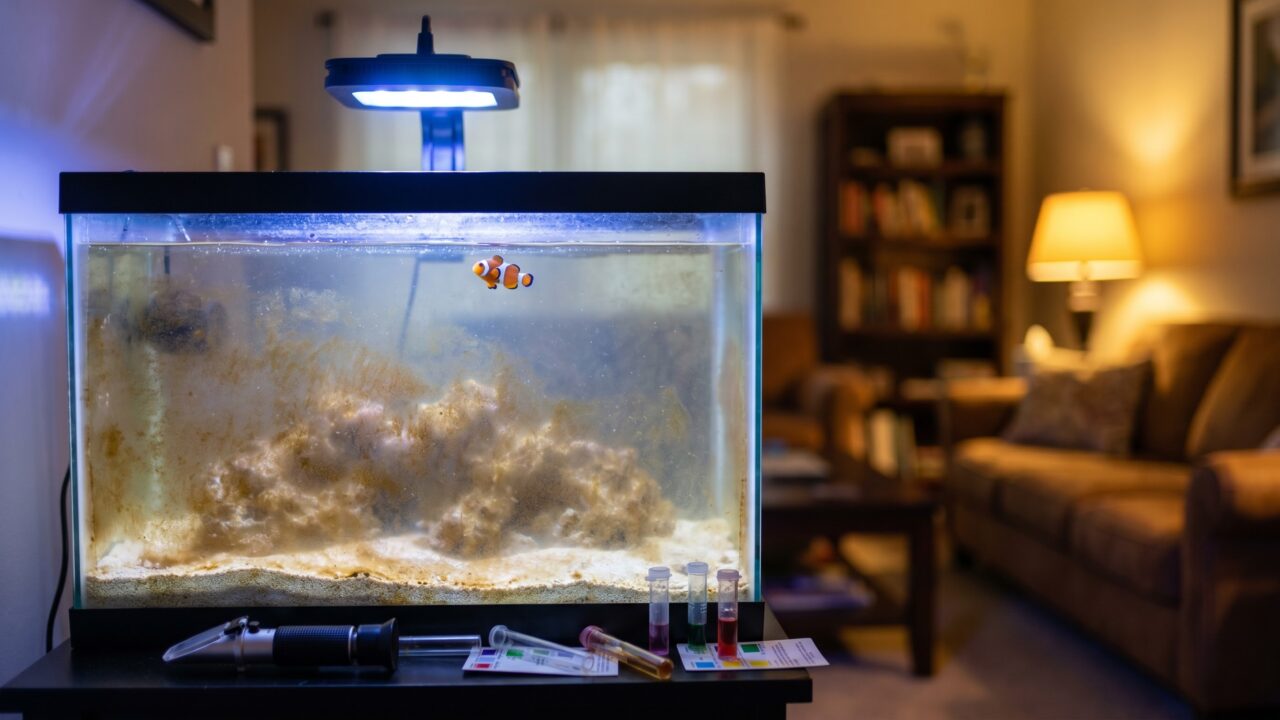
Most reef tanks that crash in their first year fail for the same handful of reasons. They are not exotic problems. They are predictable, well-documented, and almost entirely avoidable once you know what you are looking at. The eight mistakes below cover nearly every loss story a new reef keeper will encounter - each with a clear explanation of why it happens and exactly how to sidestep it.
Before anything else: if you are still getting started and have not set up a tank yet, read that guide first. The mistakes below make more sense when you already know the basics of what a reef system is trying to do.
The mistake-consequence-fix table
Use this as a quick reference. The full explanations follow below.
| Mistake | Consequence | Fix |
|---|---|---|
| Stocking too fast | Ammonia spike, fish deaths, cycle crash | Add one fish per month; test parameters before each addition |
| Chasing perfect numbers | Constant intervention, instability, stressed corals | Target stable ranges, not exact targets; test weekly, not daily |
| Overfeeding | Phosphate and nitrate spike, algae outbreak, coral stress | Feed small amounts every 1-2 days; remove uneaten food |
| Skipping quarantine | Ich or other parasites introduced to display; no reef-safe treatment exists | Four to six weeks in a separate tank before anything goes in the display |
| Using tap water | Chloramine kills bacteria and fish; heavy metals harm inverts; phosphate fuels algae | RODI water only - for mixing salt and for top-off |
| Buying gear without understanding it | Wrong settings, wasted money, equipment doing harm | Read the manual; understand what the device does before running it |
| Fighting the ugly stage with chemicals | Kills cleanup crew, removes beneficial organisms, restarts the problem | Wait it out, adjust nutrients, use a good cleanup crew |
| No top-off routine | Salinity creeps up as water evaporates, stressing fish and corals | Daily manual top-off with RODI, or fit an auto top-off (ATO) unit |
Stocking too fast
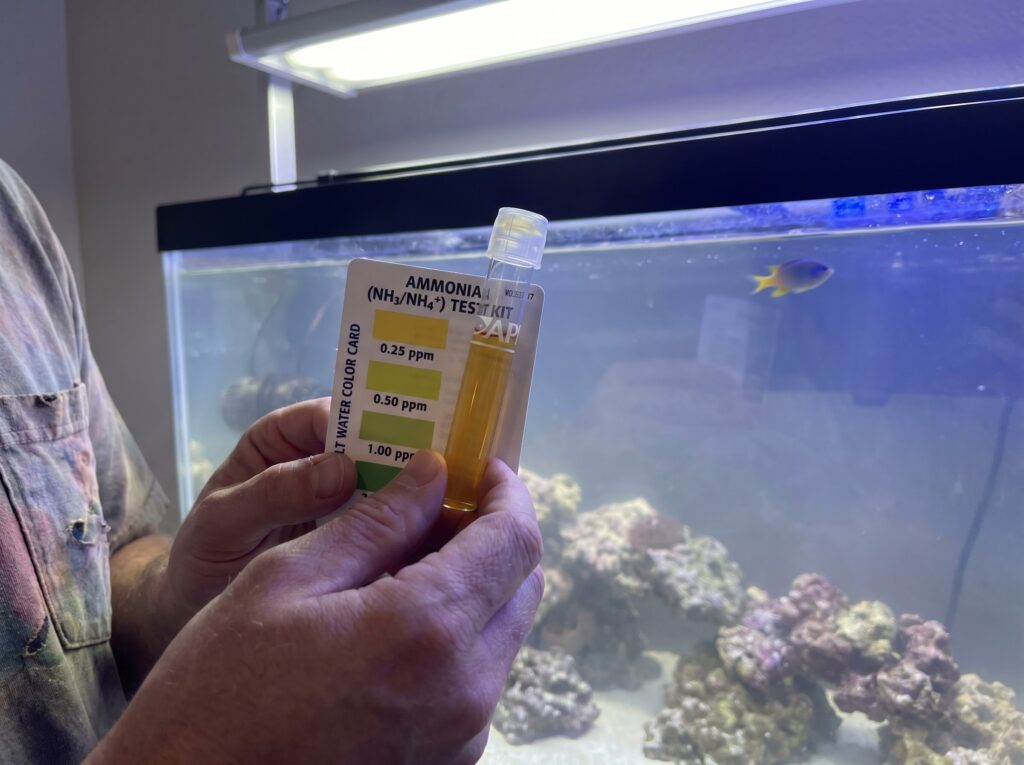
The nitrogen cycle builds a colony of nitrifying bacteria that is sized to match the biological load in the tank. Add five fish in a week to a freshly cycled system and you flood it with far more ammonia than that young colony can handle. The result is a mini-cycle: ammonia and nitrite spike, fish show labored breathing and clamped fins, and you lose livestock you just paid for.
Even an established tank can crash if you add too much at once. Beneficial bacteria are proportional to the bioload present, so a sudden jump overwhelms them regardless of how mature the system is. The standard guidance from aquarium science is to add fish gradually - one at a time, roughly one per month - and to test water parameters within 24-48 hours of each addition.
Fish density matters too. A 40-gallon reef can comfortably carry four to six small fish at most. Check our guide on how many fish a reef tank can hold before you buy anything.
Chasing perfect numbers
The most common reading error beginners make is confusing precision with stability. A reef is not a chemistry experiment that needs to land on a specific decimal point. It needs parameters that stay within a safe range and - above everything - do not swing rapidly.
The key ranges to know: alkalinity 8-9 dKH, calcium 400-450 ppm, magnesium 1,250-1,350 ppm, temperature 76-78°F, salinity 1.023-1.026 SG (35 ppt), pH 7.8-8.4. The Florida Keys National Marine Sanctuary, a NOAA authority, cites optimal reef-building coral temperatures as 73.4-84.2°F (23-29°C), and notes that even a 2°F rise above an acclimated baseline can trigger bleaching. What kills corals is not parameters sitting at 9 dKH instead of 8.5; it is alk that reads 8 on Monday and 11 on Thursday.
One equally important pair: nitrate and phosphate should never be zero. A peer-reviewed study published in Marine Pollution Bulletin (Ros et al., 2017) found that phosphate deficiency severely disrupts the coral-zooxanthellae symbiosis, causing bleaching and tissue loss. Corals need these nutrients. Ideal nitrate is roughly 1-10 ppm for most mixed reefs (1-5 ppm if you keep SPS corals); phosphate around 0.03-0.10 ppm. Strip both to zero chasing "clean water" and you starve your livestock. See our deeper guide on reef water parameters for the full breakdown by coral type.
Test weekly when things are stable. Daily testing only makes sense when you are actively troubleshooting a problem. Constant testing and constant dosing create instability, which is worse than imperfect numbers.
Overfeeding
Every uneaten pellet, every cube of frozen mysis, every extra portion of brine shrimp - all of it decays into ammonia first, then nitrate and phosphate. In a reef tank with limited export capacity (a small skimmer, no refugium, a small crew), overfeeding is the single fastest way to fuel nuisance algae. High phosphate inhibits coral calcification and can lead to bleaching. High nitrate promotes algal growth at the expense of coral tissue.
Feed small amounts once every one to two days. Fish should consume what you add in under two minutes. For corals, target feeding (using a pipette or turkey baster) is more precise than broadcast feeding and keeps nutrient input lower. If you spot uneaten food on the sandbed, remove it before the skimmer has to.
One note beginners get backwards: some feeding is necessary. Corals are living animals with metabolic needs. The goal is feeding enough to provide nutrition while keeping nutrients in range - not eliminating feeding to keep phosphate low. That mistake, covered above under chasing numbers, leads to its own set of problems.
Skipping quarantine
Cryptocaryon irritans - saltwater ich - is one of the most common and difficult diseases in marine fish keeping. It is also one that a quarantine protocol almost entirely prevents. LiveAquaria's fish health guidance states plainly: "Place all new fish in a quarantine tank for at least 2-3 weeks to ensure they are disease-free and eating properly."
The reason quarantine matters so acutely in reef tanks is that most effective treatments cannot be used in a display. Copper-based medications, which work well against ich and other parasites in a bare hospital tank, are lethal to corals, shrimp, snails, crabs, and any other invertebrate in the system. The same source notes that "copper is very toxic to invertebrates and can never be used in reef aquariums or aquariums with invertebrates." Once ich establishes in a reef display, your treatment options are extremely limited.
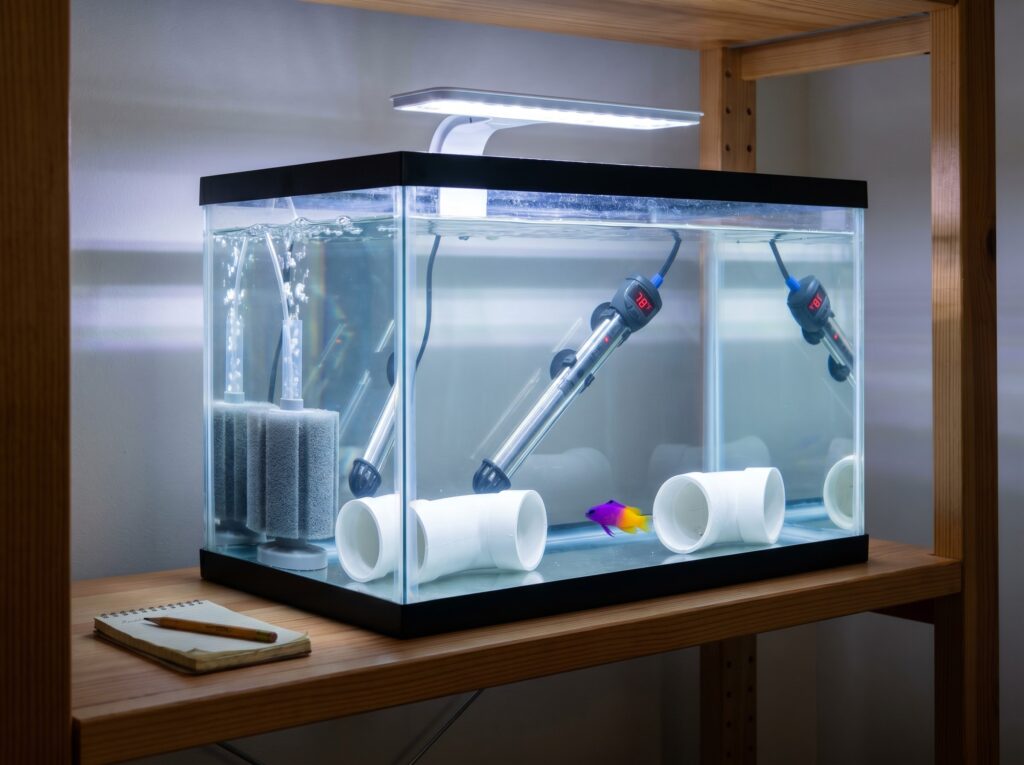
A basic quarantine tank does not have to be elaborate: a spare 10-20 gallon tank with a heater, sponge filter (seeded from your display sump), and a PVC hide is enough. Run new fish through four to six weeks there. Observe for white spots, labored breathing, or clamped fins. Treat in the QT if needed. Then move them to the display with confidence. See our full guide on treating ich in a reef tank for protocol details.
Using tap water
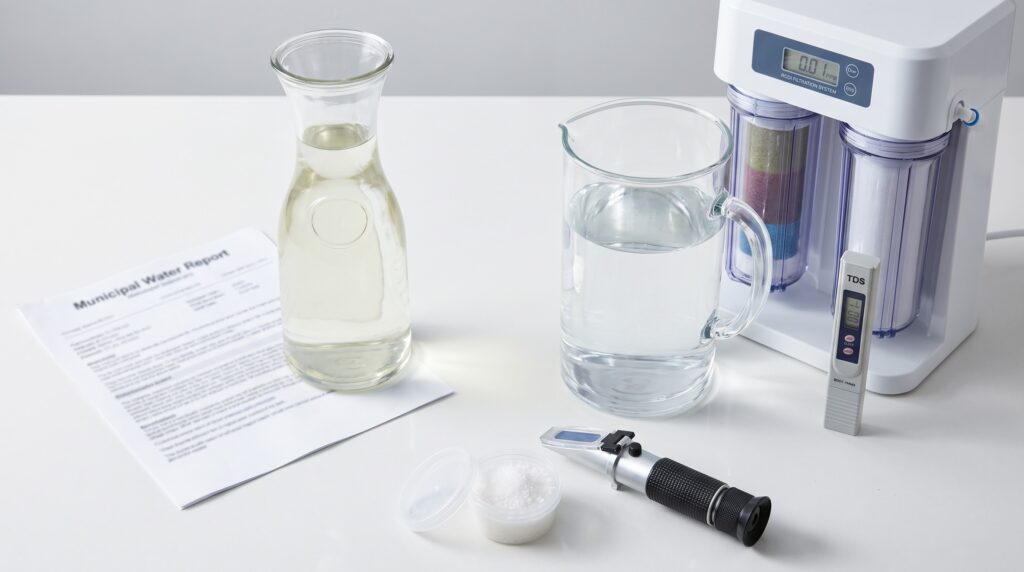
Tap water looks fine to drink - and by drinking-water standards it is. But the EPA requires a minimum of 0.2 ppm total chlorine (or chloramine) in residential tap water. That concentration is toxic to fish and, critically, it kills the beneficial bacteria your biological filter depends on. It also typically carries heavy metals (copper, lead, zinc) at concentrations low enough for humans but high enough to harm or kill invertebrates like shrimp and snails. Phosphate is a common tap water additive used to reduce pipe corrosion; it will also fuel algae outbreaks in your tank.
The fix is non-negotiable: use RODI (reverse osmosis/deionized) water for everything - mixing salt and for daily top-offs. RODI strips dissolved solids down to near zero, giving you a clean base to build the chemistry you want. More on this in our equipment guide on RODI systems for reef tanks.
One more measurement note: if you use a standard optical refractometer to check salinity, understand that most such instruments are calibrated for sodium chloride brine, not actual seawater. Because seawater and brine bend light differently, true 35 ppt seawater reads as roughly 36.8 ppt on a brine-calibrated scale - meaning that if your refractometer shows 35 ppt, you are actually low. The practical fix is to calibrate using a seawater standard solution (not plain fresh water), or to use a digital refractometer that is specifically calibrated for seawater and compensates for temperature automatically.
Buying gear before understanding it
Protein skimmers, dosing pumps, calcium reactors, UV sterilizers, refugiums - reef equipment is complex, and "plug it in and hope" is a recipe for harm. A dosing pump set to dose alkalinity at the rate needed for a mature SPS tank will swing alk dramatically in a new system with zero coral consumption. A calcium reactor tuned for 10 hours of flow per day will crash pH if the effluent drip rate is wrong.
Before running any piece of equipment for the first time, read the manufacturer's guide and understand what it is doing. For dosing in particular: start at a low dose, test before and after for several days, and scale up only when you have data showing the tank is consuming what you are adding. Our equipment section has primer guides on the biggest categories - start with protein skimmers explained and dosing pumps explained if either is in your setup.
This mistake also shows up with lighting. A beginner who turns a powerful LED to 100% intensity over a new tank with freshly added corals will bleach them from photoinhibition before they ever had a chance to acclimate. Ramp intensity up over four to six weeks.
Fighting the ugly stage with chemicals
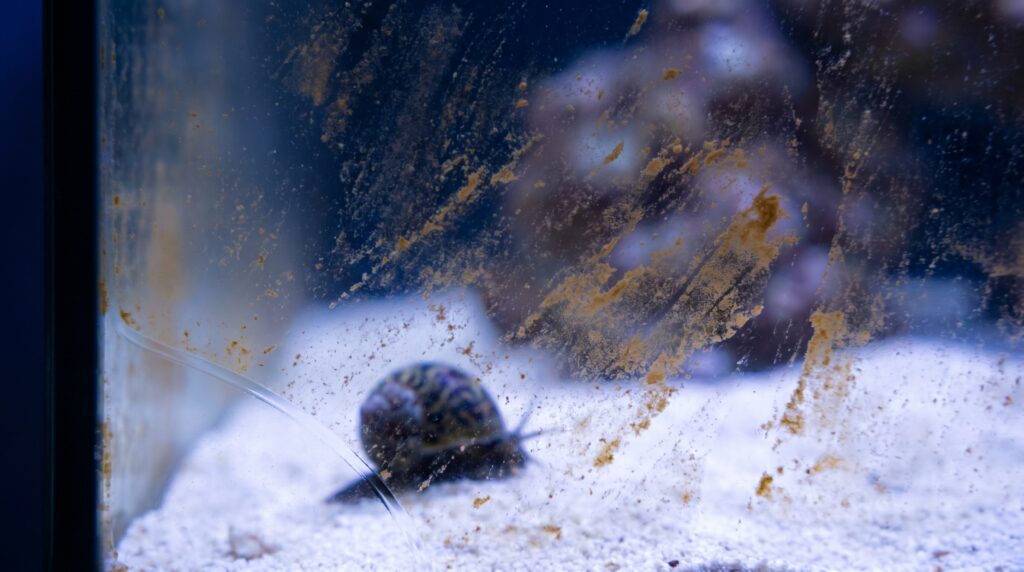
New tanks go through a normal, messy progression that reef keepers call the ugly stage. Brown diatoms coat the sand and glass first - a silica bloom common in new systems that usually clears on its own within a few weeks. Cyanobacteria (red or purple slimy mats) may follow, responding to excess nutrients and low flow. Some tanks see dinoflagellates, the most challenging of the three, which often appear in very sterile, low-nutrient systems lacking a balanced microbiome.
The beginner impulse is to reach for a chemical fix: antibiotic-style products, large emergency water changes, chemiclean poured into the display the moment anything brown appears. The problem is that many of these interventions harm or kill the cleanup crew, disrupt the developing bacterial community, and remove the very organisms competing with the nuisance algae. You clear the visible problem, but the underlying imbalance remains - and the algae returns.
The better approach is to let the tank mature. Diatoms need patience, a consistent light cycle, and a starter cleanup crew (snails, hermit crabs). Cyano usually responds to increased flow and reduced nutrients. Dinoflagellates take more work - adjusting nutrients, adding a copepod-seeded refugium, and sometimes targeted light manipulation - but chemical warfare in the display tank is rarely the right first move. Our reef tank ugly stage guide walks through each phase and the right interventions.
No top-off routine
Water evaporates from a reef tank every single day. Salt does not. So as water leaves through evaporation, the remaining water becomes progressively saltier. A moderately sized reef tank can lose a meaningful fraction of a gallon per day depending on room temperature, airflow, and lighting heat - more in warm or well-ventilated rooms. Left unchecked for several days, salinity climbs noticeably - enough to stress fish and corals before most beginners realise it is happening.
The fix is simply replacing evaporated water with fresh RODI water daily. Skipping even two or three days, especially in summer, creates swings that show up as closed coral polyps, pale coloration, and stressed fish. The cleanest solution is an auto top-off (ATO) system, which uses a water-level sensor to drip fresh RODI water into the sump in small, continuous amounts. This keeps salinity rock-steady without any daily manual action. More on sizing and choosing one at our ATO systems guide.
If you are hand-topping off: mark the water level on your sump or back chamber with a piece of tape. Add water daily to that line. Test salinity weekly to confirm the routine is working. Do this consistently and salinity becomes one less variable to worry about.
Frequently asked questions
How long should I wait before adding corals to a new reef tank?
Wait until the nitrogen cycle is fully complete - ammonia and nitrite both reading zero on consecutive tests, typically four to eight weeks. Then let the tank run for another four to six weeks before adding your first corals. Corals placed into an unstable, newly cycled system rarely thrive and often decline slowly without an obvious cause.
Can I use dechlorinated tap water instead of RODI water?
Dechlorination removes chlorine and chloramine but leaves behind everything else: dissolved minerals, phosphates, silicates, heavy metals, and any other chemicals the water utility adds. These accumulate over time and cause algae outbreaks, harm invertebrates, and interfere with dosing accuracy. RODI is the only reliable baseline for a reef system.
My nitrate reads zero - is that good?
Zero nitrate in a mature, stocked reef is unusual and potentially a problem. Corals and their symbiotic zooxanthellae use nitrate as a nutrient. Research published in Marine Pollution Bulletin confirms that phosphate deficiency alone can cause bleaching, and chronically zero nutrients starve the coral-algae symbiosis. Target a nitrate range of 1-10 ppm for a mixed reef, not zero.
What is the simplest way to prevent ich in a reef tank?
Quarantine every new fish for four to six weeks before introducing it to the display. Ich and other parasites cannot complete their lifecycle in a reef tank with no new fish hosts if you keep the display fallow during an outbreak and run all new arrivals through a hospital tank first. There is no reef-safe cure once ich is established in the display, so prevention is the only real solution.